Writing retreat generates strong publication pipeline
Academics
21 August 2026
By Tshilidzi Khangala
A focused five-day academic writing retreat hosted by the Department of Law, Safety and Security Management (LSSM) delivered impressive results, with 22 manuscripts submitted, one publication achieved and several additional papers identified for future submission.
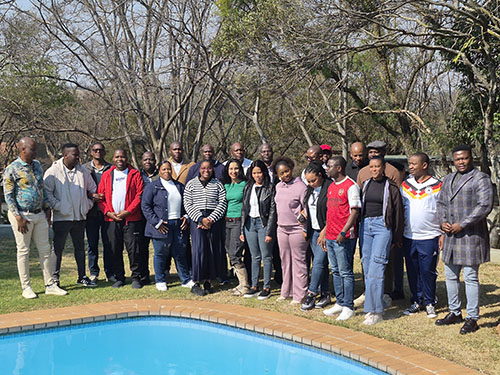 Designed to increase research output and strengthen scholarly writing, the retreat provided academic and administrative staff with dedicated time to advance their research, enhance publication skills, foster collaboration and contribute meaningfully to the department's research goals.
Prof Madoda Cekiso, Department of Applied Languages, facilitated the retreat, which brought together full-time and part-time staff members. Participants were required to arrive with a manuscript that was at least 80% ready for submission, allowing them to focus on refining and completing their work in a structured environment.
The retreat aimed to provide uninterrupted time for academic writing, enhance scholarly writing and publication skills and encourage peer learning and collaboration. Participants engaged in structured writing sessions, manuscript revision and improvement, peer review discussions and consultations with facilitators and mentors. Sessions also addressed journal selection, responding to reviewers and identifying and avoiding predatory journals.
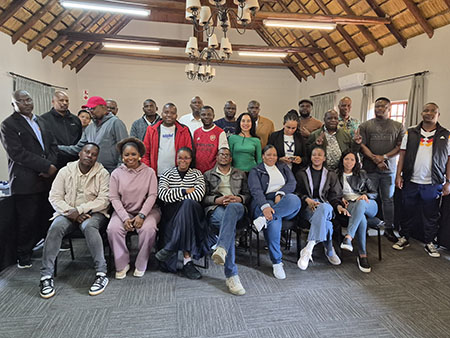 Adv Tshilidzi Khangala, Lecturer, Programme Coordinator, and Acting Head of Law, Safety and Security Management, said the retreat created an environment in which staff could dedicate meaningful time to their research while benefiting from expert guidance and peer support.
Prof Adewale Olutola, Chairperson of the Departmental Committee on Research and Innovation (DCRI), played a key role in coordinating the retreat and ensuring its successful implementation. The department also acknowledged the support of Prof Mashupye Maserumule, Executive Dean of Humanities, whose emphasis on research-informed lecturing provided strategic direction for the initiative, and Prof Kholofelo Rakubu, Assistant Dean for Research, for her continued support.
The retreat delivered measurable outcomes. Participants submitted 22 manuscripts during or immediately after the programme, identified six manuscripts with strong potential for future submission and celebrated the publication of one manuscript during the retreat.
These achievements support the Faculty of Humanities' strategic research agenda and help strengthen the University's research profile. They also reflect the faculty's commitment to advancing scholarship of consequence and building a vibrant research culture.
Building on this success, the department plans to host similar retreats regularly, expand mentoring opportunities and explore strategies that allow researchers more dedicated time for research and scholarly writing. These efforts will help sustain momentum and further strengthen research excellence within the faculty.