TUT turns traditional grains into modern medicine
Academics
4 February 2026
Innovative research at TUT is transforming indigenous grains and medicinal plants into science-backed health products while students gain hands-on industry experience.
A research team from the Tshwane University of Technology’s (TUT) Department of Pharmaceutical Sciences has developed an innovative nutraceutical range that blends indigenous grains and medicinal plants into probiotic-rich products with wide health benefits.
At the centre of this work is Niselo, a nutraceutical beverage produced by NutriGO SA, a TUT spin-off company. The project draws on Africa’s rich heritage of medicinal plants and traditional grains and applies modern science to create products for health nutrition and wellness.
Niselo is a sorghum-based beverage formulated into a non-dairy probiotic yoghurt. It is rich in fibre and protein and is lactose- and gluten-free. The product is suitable for all age groups and is used by marathon runners, students, farmers, taxi drivers and professionals who need convenient and nutritious food on the go. In collaboration with BiaGO in the UK, NutriGO recently successfully pilot-manufactured a multigrain variation of Niselo called DeLishe for the Kenyan market. The work was funded by Unilever and managed by InnovateUK.
The initiative also doubles as a living laboratory where students gain practical experience by learning to develop, test and commercialise products that address real health challenges.
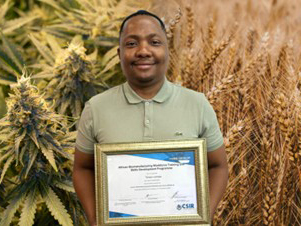 Dr Tshepo Lechaba, Deputy Director of Research and Niche Areas Support at the Directorate of Research and Innovation, as well as a researcher in the Pharmaceutical and Biotech Advancement in Africa group within the Department of Pharmaceutical Sciences, Photo: Gareth Davies/Food For Mzansi
Dr Tshepo Lechaba, Deputy Director of Research and Niche Areas Support at the Directorate of Research and Innovation, as well as a researcher in the Pharmaceutical and Biotech Advancement in Africa group within the Department of Pharmaceutical Sciences, highlighted the significant potential that indigenous medicinal plants and ancient grains hold for improving health and nutrition. He explained that Niselo was conceptualised by Prof David Katerere as part of SanBio BioFISA II innovation challenge communities.
Dr Tshepo Lechaba, Deputy Director of Research and Niche Areas Support at the Directorate of Research and Innovation, as well as a researcher in the Pharmaceutical and Biotech Advancement in Africa group within the Department of Pharmaceutical Sciences, Photo: Gareth Davies/Food For Mzansi
Dr Tshepo Lechaba, Deputy Director of Research and Niche Areas Support at the Directorate of Research and Innovation, as well as a researcher in the Pharmaceutical and Biotech Advancement in Africa group within the Department of Pharmaceutical Sciences, highlighted the significant potential that indigenous medicinal plants and ancient grains hold for improving health and nutrition. He explained that Niselo was conceptualised by Prof David Katerere as part of SanBio BioFISA II innovation challenge communities.
Inspired by the use of medicinal plants and ancient grains such as sorghum and finger millet in rural Africa, , who is at the helm of TUT’s Cannabis and Hemp Research Hub, wanted to offer an alternative that could help address diseases affecting communities while restoring value to traditional foods that are often abandoned as people adopt westernised diets.
The research platform is built on four pillars. The first focuses on cannabis and hemp through contract extraction and formulation services in partnership with licensed growers, doctors and stakeholders. Using a supercritical CO₂ extraction system based at the CSIR, the team develops cannabis oils and related products.
The second pillar centres on nutritional products derived from indigenous grains such as sorghum and finger millet. These grains are infused with probiotics to support gut health, regulate dietary sugars, boost immunity and address digestive challenges using African traditional ingredients.
The third pillar involves mushroom cultivation. Mushrooms are rich in protein and probiotics and are being explored for products, including drinks that support sports nutrition, using organic and natural ingredients.
The fourth pillar focuses on traditional medicine and natural products. The team works with traditional healers to study medicinal plants scientifically to ensure safety, effectiveness and suitability for human consumption.
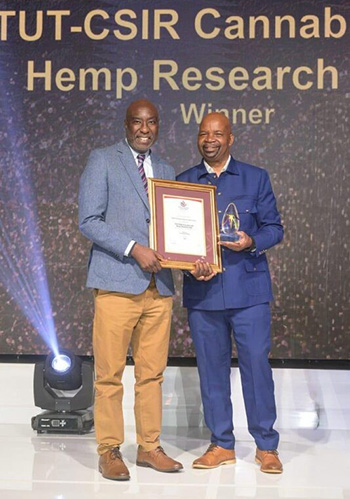 Prof David Katerere (left), receiving the TUT Academic Excellence Award for Newsmaker of the Year, which was won by the TUT Cannabis & Hemp Research Hub, with the award handed over by TUT’s Vice-Chancellor and Principal, Prof Tinyiko Maluleke.
The project is supported by postgraduate students at Master’s and Doctoral levels who contribute to clinical testing, quality assurance and scientific validation. According to Lechaba, this has helped the initiative grow from a concept into a complete value chain supported by research, exhibitions, conference presentations and academic publications.
Prof David Katerere (left), receiving the TUT Academic Excellence Award for Newsmaker of the Year, which was won by the TUT Cannabis & Hemp Research Hub, with the award handed over by TUT’s Vice-Chancellor and Principal, Prof Tinyiko Maluleke.
The project is supported by postgraduate students at Master’s and Doctoral levels who contribute to clinical testing, quality assurance and scientific validation. According to Lechaba, this has helped the initiative grow from a concept into a complete value chain supported by research, exhibitions, conference presentations and academic publications.
The products are aimed at all South Africans who need wellness solutions, whether healthy or recovering from illness or surgery. Niselo is often used to maintain energy, manage weight, support recovery and improve physical performance, especially when solid food is difficult to consume.
Beyond community use, the team is targeting retailers and export markets. Products are already available in parts of Tshwane, Bloemfontein and mining areas such as Rustenburg, with plans to expand nationally and internationally.
Lechaba said partnerships in distribution and marketing are a priority to ensure the products reach more communities while contributing to economic upliftment. He emphasised that visibility, quality scientific collaboration and strict food safety standards are essential to building sustainable and credible health brands.