TUT strengthens TVET lecturer capacity through technical programming training
Academics
10 November 2026
By Kgothatso Monono
The Tshwane University of Technology (TUT) is strengthening programming education in South Africa’s Technical and Vocational Education and Training (TVET) sector through a specialised lecturer development programme aimed at enhancing teaching capacity and practical programming skills.
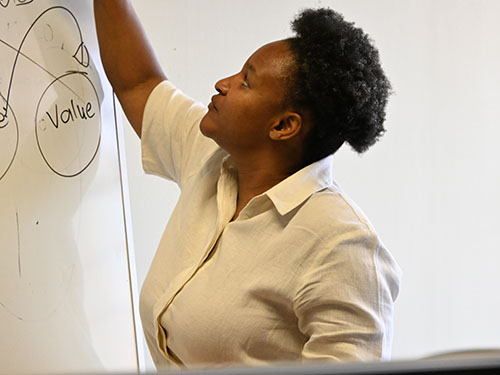 Vathisws Booi
Presented by the Faculty of Information and Communication Technology (ICT) through its Department of Computer Science, the NCV Technical Programming: Lecturer Development Short Learning Programme (SLP) brings together lecturers from TVET colleges across the country for intensive programming training. The programme equips lecturers with the technical knowledge, practical skills and teaching approaches required to effectively deliver the National Certificate (Vocational) Coding and Robotics curriculum.
The first training session, NCV Level 2: Introduction to Python, took place from 19 to 23 October 2026, followed by NCV Level 3: C/C++ Programming from 26 to 30 October 2026. Both sessions provided participants with opportunities to deepen their programming knowledge through hands-on activities and focused engagement with relevant curriculum content.
Lecturers from 13 TVET colleges participated in the training, representing Motheo, Mopani, Waterberg, Sedibeng, Flavius Mareka, Central Johannesburg, Nkangala, WestCol, Ehlanzeni, Ekurhuleni West, Umfolozi, King Sabata Dalindyebo and Vhembe TVET colleges. The Level 2 training was facilitated by Dr Bertie Buitendag, with presentations by Tshepho Raphiri, Frederik Hattingh and Relebogile Langa. The Level 3 sessions were presented by Kyle Stone, Vathisws Booi and Tumelo Malebane, under the programme facilitation of Dr Buitendag.
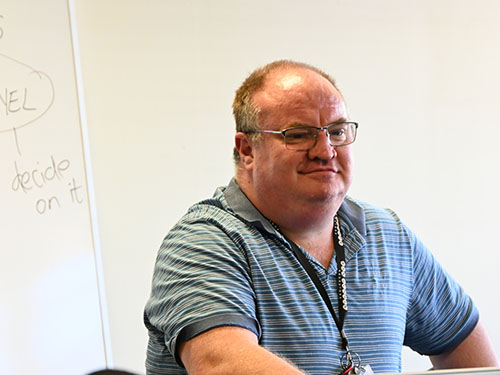 Dr Bertie Buitendag, Senior Lecturer
Beyond strengthening subject knowledge, the programme equips lecturers with effective teaching strategies to guide students from foundational computational thinking and basic programming principles towards more advanced programming concepts. It also focuses on practical problem-solving, programming methodologies, curriculum interpretation and appropriate assessment approaches.
Dr Buitendag said the Department of Computer Science has maintained a strong working relationship with the Department of Higher Education and Training (DHET) and the TVET sector since 2006, when the NCV Specialisation Programme in CS/IT was introduced. “We trained the initial cohort of TVET college lecturers and, in collaboration with the Department of Mechatronics, commenced training all Coding and Robotics lecturers. The training programme is ongoing and is being facilitated through the Technology Station in Electronics (TSE), which is based in the Faculty of Engineering and the Built Environment (FEBE).”
The initiative responds to the growing demand for suitably equipped educators as TVET colleges implement the NCV Coding and Robotics qualification. By strengthening lecturers’ technical competencies and teaching approaches, the programme supports the effective delivery of programming education while helping prepare students with relevant digital and software development skills.
The final training session, NCV Level 4: Advanced Python, is scheduled for 16 to 20 November 2026. Lecturers from Coastal KZN and Boland TVET colleges are expected to join colleagues from institutions represented during the earlier sessions, further extending the programme’s national reach and strengthening collaboration across the TVET sector.
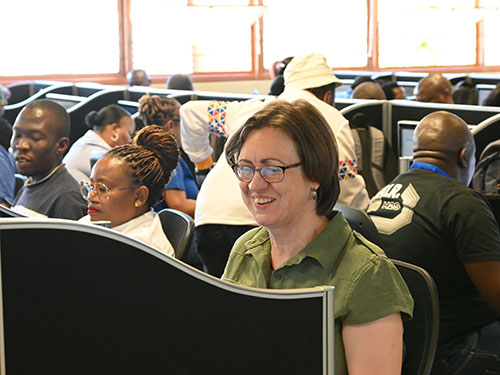 TVET lectures who attented the training workshop.
The successful coordination and implementation of the programme were also supported by Faculty Administrator Lizzy Jane Mafora and Derick Mahlangu. Their administrative and logistical support contributed to the smooth running of the training sessions and helped create an organised and supportive learning environment for participants.
Through the initiative, ICT faculty continues to demonstrate its commitment to skills development, strengthening partnerships with TVET institutions and building programming expertise within South Africa’s vocational education system.
The programme also underscores the faculty’s broader contribution to developing ICT skills and strengthening educators’ capacity to prepare students for the demands of an increasingly technology-driven world.
 Relebogile Langa