TUT pioneers Nanomedicine and diagnostics manufacturing through multidisciplinary approach
AcademicsOtherResearch & Innovation
17 February 2026
The Tshwane University of Technology (TUT) is strengthening its position in pharmaceutical innovation under Prof Clemence Tarirai, an NRF C3-rated (2025) Associate Professor of Pharmaceutical Sciences
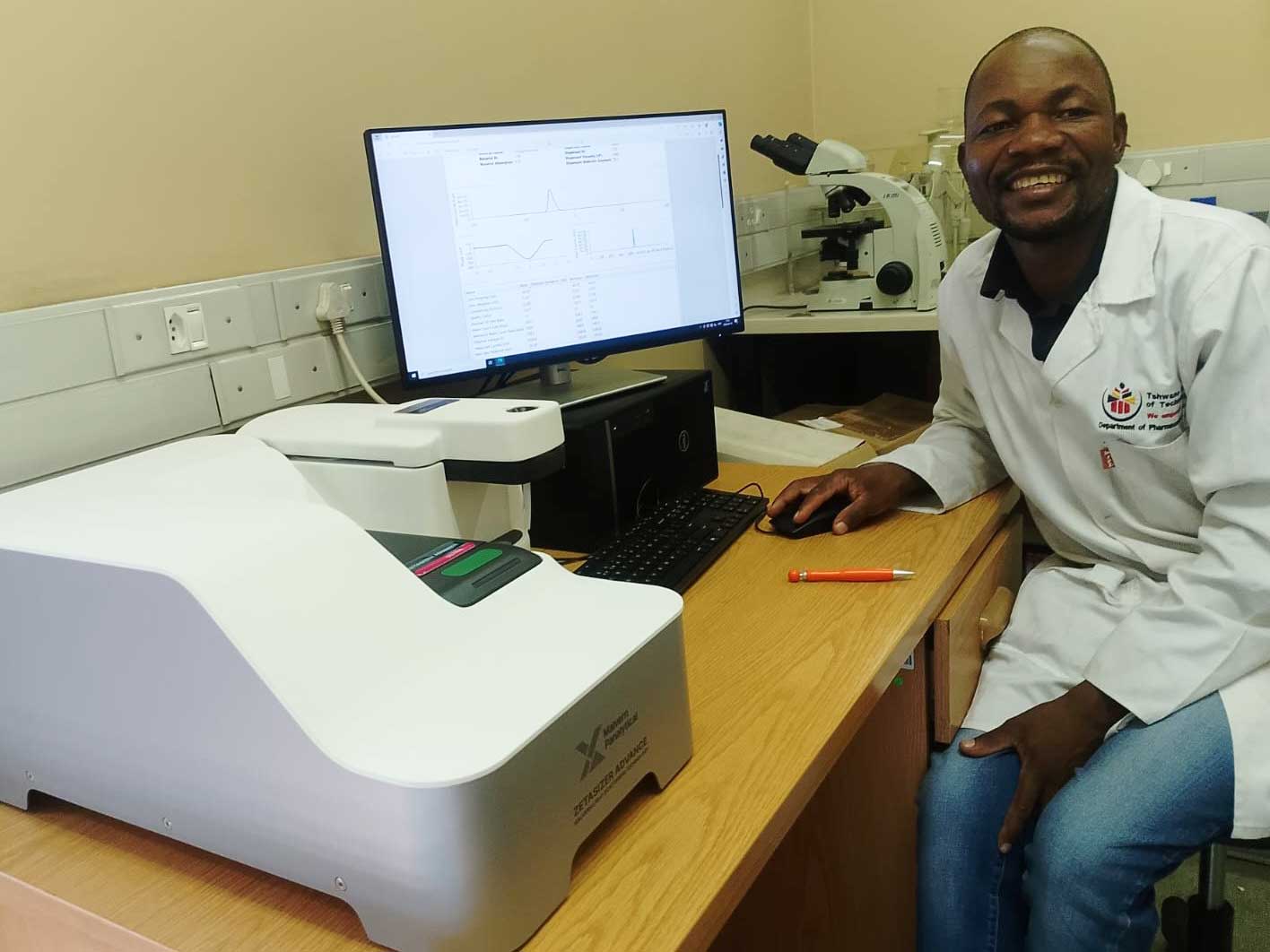 Prof Clemence Tarirai
Prof Tarirai leads the Nanomedicine Manufacturing, Biopharmaceutics and Diagnostics Research Group, advancing applied nanotechnologies for drug, vaccine and nutrient delivery.
Prof Clemence Tarirai
Prof Tarirai leads the Nanomedicine Manufacturing, Biopharmaceutics and Diagnostics Research Group, advancing applied nanotechnologies for drug, vaccine and nutrient delivery.
With a Doctor of Technology in Pharmaceutical Sciences, two Master’s degrees in Pharmaceutical Sciences and Public Health and a Bachelor of Pharmacy degree, Prof. Tarirai brings a strong multidisciplinary foundation to his work. His research focuses on the design and characterisation of multifunctional micro- and nanoparticle dosage forms, incorporating innovative bioactives, bioenhancers and biomaterials to improve therapeutic outcomes and diagnostic capabilities.
Prof Tarirai has presented his research at more than 60 peer-reviewed local and international conferences and has published extensively in the fields of pharmaceutical sciences, nanomedicine and public health. In 2016, he expanded his global research footprint as a visiting NRF Postdoctoral Fellow in Pharmaceutical Nanotechnology at the University of Michigan.
His research programme has attracted significant funding support, including grants from the South African Medical Research Council (SAMRC) through the SIR Grant, the Technology Innovation Agency (TIA) Seed Fund and multiple NRF travel and rating grants.
In 2025, he secured an NRF National Equipment Grant exceeding R1.93 million, enhancing TUT’s research infrastructure and capacity in nanomedicine and diagnostics manufacturing. “Our state-of-the-art, top-of-the-range Malvern Zetasizer that was commissioned on 6 February 2026, is a cornerstone of modern analytical sciences, serving as a high-precision instrument that characterises the physical properties of nanoparticles and molecules in liquid dispersions utilising advanced dynamic light-scattering techniques to provide critical data on particle size (0.3 nm - 10 um), polydispersity index, zeta potential (surface charge) and molecular weight, allowing researchers to predict the stability and behaviour of complex formulations. From ensuring the shelf-life of life-saving vaccines and pharmaceuticals to optimizing the texture of food emulsions and the performance of high-tech coatings, the Zetasizer’s ability to detect microscopic changes like protein aggregation makes it an indispensable tool for collaborative quality control and innovation endeavours across the global academia, pharmaceutical, biotech, chemical, and manufacturing sectors.” said Prof Tarirai.
Beyond research, Prof Tarirai plays an important role in academic governance and ethical oversight. He chairs the CSIR Research Ethics Committee and the TUT Faculty of Science Research Ethics Committee, while also serving as a triple member of the TUT Human Research Ethics Committee. His national contributions include service on the South African Health Products Regulatory Authority (SAHPRA) P&A Committee and the NHREC.
A committed educator and mentor, Prof Tarirai externally moderates and examines undergraduate and postgraduate programmes in Pharmaceutics, Nanomedicine and Public Health across several institutions. He also serves as a reviewer for academic journals and funding bodies, including the NRF and SAMRC.
Through interdisciplinary research, industry engagement and international collaboration, Prof Tarirai continues to advance nanomedicine and diagnostics manufacturing capacity at TUT, contributing to pharmaceutical innovation and strengthening scientific development across Africa.