TUT names its second humanoid robot ‘Nyiko’, a gift to research and innovation
Academics
30 October 2026
By Phumla Mkize
Tshwane University of Technology (TUT) has named its second humanoid robot Nyiko, meaning “gift”, reflecting the institution’s commitment to advancing research, technological innovation and societal impact through robotics and artificial intelligence (AI).
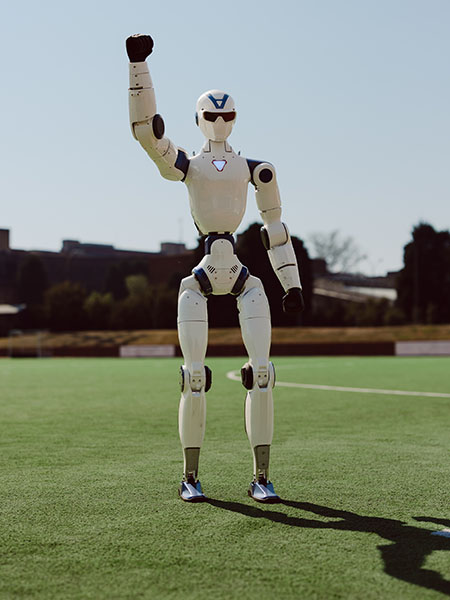 Nyiko, TUT’s second humanoid robot.
The name symbolises the university’s vision of using emerging technologies to create new research opportunities, develop specialised skills and contribute to solutions that address South Africa’s developmental challenges. Nyiko represents an investment in the country’s technological future and TUT’s ambition to strengthen its contribution to the Fourth Industrial Revolution.
Nyiko is a Unitree R1 bipedal humanoid robot developed by Unitree Robotics. It is the second humanoid among TUT’s robots, which include the Unitree G1 humanoid and the quadruped robot dog, named Dexter.
TUT’s robotics initiative aligns with South Africa’s Science, Technology and Innovation (STI) Decadal Plan (2022–2032), which outlines a national vision to transition the country from a consumer of technology into an active developer of innovative technological solutions.
The Decadal Plan identifies 4IR technologies, including AI and robotics, as foundational to modernising industries, supporting economic re-industrialisation and promoting inclusive economic growth. These technologies have the potential to transform how industries operate, improve productivity and expand the development of locally relevant technological capabilities.
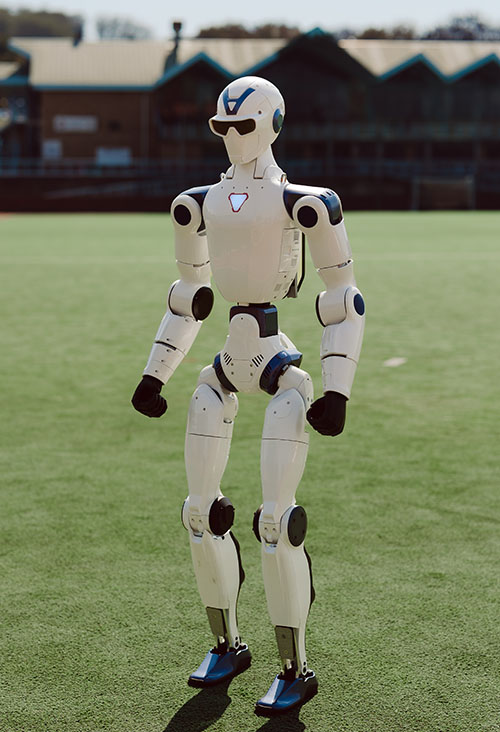 Through the TUT AI Hub, the French South African Institute of Technology (F’SATI) and the South African Research Chairs Initiative (SARChI), TUT is developing research capabilities, experimental platforms and a pipeline of skilled talent to advance intelligent robotic systems.
A key focus of the work done in robotics at TUT is adaptive decision-making, which enables robotic systems to respond effectively to changing tasks, operating environments, system conditions and resource constraints. This involves coordinating
decisions across physical movement, perception, computing resources and behavioural responses while maintaining safety and operational effectiveness.
Such capabilities are important in developing robotic systems that can operate reliably in complex, real-world environments, where conditions and demands may change continuously.
Nyiko, therefore, represents more than an addition to the University’s technological capabilities. It provides an opportunity to advance research and experimentation in humanoid robotics while supporting the development of expertise in AI, engineering and related disciplines.
As its name suggests, Nyiko is envisioned as a gift that extends beyond the university, creating opportunities for knowledge development, innovation and societal benefit. Through continued investment in robotics and AI, TUT is positioning research as an important driver of technological progress and inclusive development in South Africa.