TUT Interior Design students bring their designs to life in RAW Modular challenge
Academics
3 November 2026
Two weeks of creative experimentation, technical problem-solving and hands-on manufacturing challenged second-year Tshwane University of Technology (TUT) Interior Design students to take their ideas beyond the drawing board at the 2026 RAW Modular Design Camp.
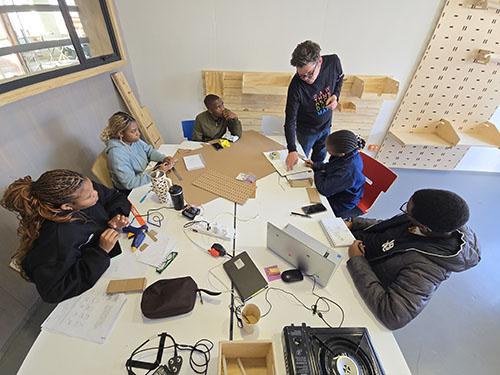 Peet van Straaten (RAW Modular’s founder) troubleshoots design solutions with students.
Now in its third consecutive year, the collaboration between TUT’s Department of Interior Design, within the Faculty of Arts and Design, and RAW Modular continues to provide an immersive industry learning experience that bridges academic learning and professional practice. Hosted at RAW Modular’s design and manufacturing facilities, the camp introduces students to modular design principles, material efficiency and the practical realities of translating creative concepts into functional products.
A creative brief with real-world constraints
The 2026 challenge placed a fresh emphasis on user-centred design, tasking student groups with developing multifunctional workstations for artisan content creators. Each group was assigned a fictional client profile representing a creative entrepreneur to design for, ranging from chefs and seamstresses to multimedia artists and instrument makers.
Each group was allocated just one RAW Modular Klik backing board and two sheets of birch plywood to craft a design solution that accommodated the crafter’s work and content creation needs. Within these limitations, students developed innovative, multifunctional components that were practical, adaptable, ergonomically considered and technically feasible to manufacture.
Students discovered that both creative imagination and working within the constraints of existing component dimensions, connections, movement restrictions and manufacturing tolerances required careful consideration. These constraints encouraged students to rethink their ideas and explore creative possibilities within defined technical parameters.
Learning through making
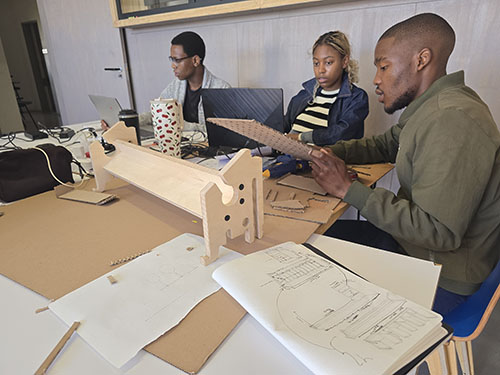 Lwazi Langazana and Nyakallo Kgaudi compare the accuracy of their sketches and digital drawings against a scale model.
The camp began with modular design theory and practical exercises before students progressed into the design and manufacturing stages of their projects.
Working alongside RAW Modular's experienced team, students explored cutting, assembling, testing and refining their designs. Ideas that appeared convincing on paper were challenged by the realities of materials, construction and functionality, requiring continuous evaluation and adaptation.
For many, this represented a significant shift in their approach to design. Beyond the visual qualities of a proposal, they had to consider how components would be manufactured, assembled and used. As their technical confidence developed, initial uncertainty gave way to experimentation, independent problem-solving and the satisfaction of seeing their designs take physical form.
The restricted material allocation also reinforced principles of sustainable design, encouraging careful planning, efficient material use and adaptable, multifunctional solutions.
More than a design workshop
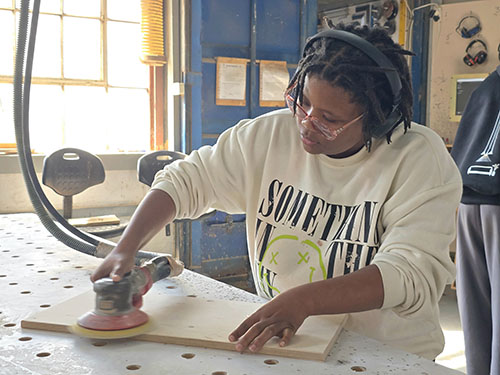 Cortess Mahoka sands down a component part in preparation for final assembly.
Although the design challenge was demanding, the camp was equally memorable for its energetic and supportive atmosphere.
Beyond the workshop activities, quiz evenings, informal soccer games and wellness discussions created opportunities for students to relax, engage and build relationships beyond their usual classroom interactions.
Working in unfamiliar teams encouraged communication, collaboration and resilience as students navigated tight deadlines, technical setbacks and unexpected design challenges together. What may have initially seemed intimidating became an opportunity to discover new capabilities, strengthen friendships and experience the satisfaction of making something that worked.
Building a lasting industry partnership
The 2026 camp builds on a growing collaboration between the Department of Interior Design and RAW Modular, which has progressively introduced students to the possibilities of modular design and manufacturing. Peet van Straaten and his team at RAW Modular channel years of experience into a short timeframe to expose students to the real-world art of design-making.
In 2024, students explored multifunctional components for the Klik system, emphasising flexibility, experimentation and creative problem-solving. The 2025 collaboration further developed this aspect with second-years, while senior students developed an emergency shelter prototype interior using a cleat wall system. This year's focus on workstations for creative entrepreneurs introduced an additional layer of user-centred thinking and functional adaptability.
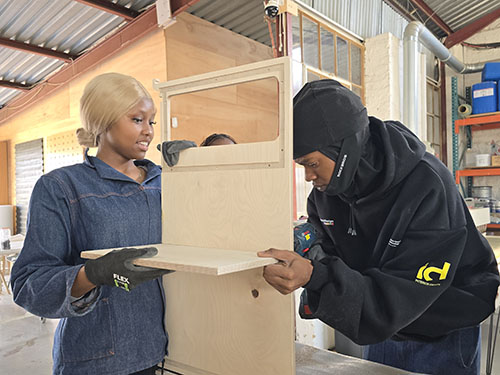 Lonwabo ‘Lenni’ Mfokazi and James Mokwena assemble a component.
The partnership aligns with TUT's commitment to developing future-ready graduates who integrate creative thinking with technical competence and respond to evolving industry challenges.
Ultimately, though, the camp is about more than producing functional design solutions. It encourages students to question assumptions, embrace experimentation, learn from setbacks and recognise the value of collaboration.
The 2026 cohort left the camp not only with a deeper understanding of modular design but also with a new sense of themselves as makers.
As students reflected: “I learned the importance of precision, experimentation and attention to detail, which I can apply to future design projects to create more functional, creative and well-executed outcomes.”
“Working with an industry member provided valuable insight into the expectations and practical realities of professional design practice. It helped me understand the importance of considering functionality, material choices, construction methods, accuracy and the feasibility of a design solution.”
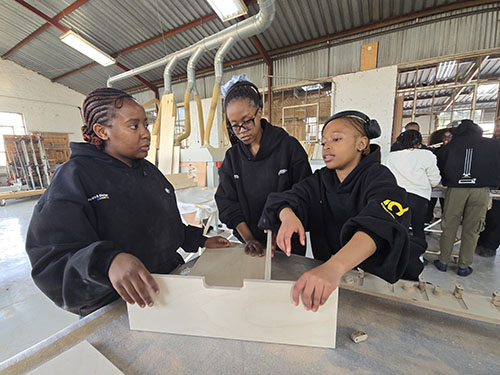 Linness Phokontsi, Tisetso Nyakale and Mpho Mzamo assemble a component.
“During the RAW Modular Camp, I improved my practical skills in working with materials, tools and assembling modular designs. I learned the importance of precision, measuring accurately and paying attention to detail. I can apply these skills to future design projects by creating more functional, well-constructed and professional design outcomes.”
Inge Newport, Head of the Department of Interior Design, shared that: “These experiences demonstrate that some of the most valuable design lessons emerge when students are given the opportunity to think, experiment and build their ideas in practice. Partnering with industry members like RAW Modular gives our students a competitive edge by exposing them to the real world of work before they are expected to operate in it.”
For more on RAW Modular and while we wait for this year’s video release, you can catch up here on last year’s camp.
For more updates from the Department of Interior Design, join us on LinkedIn, Facebook, or Instagram.
PHOTOS: Inge Newport
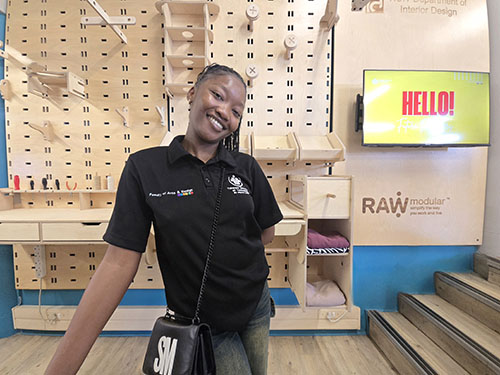 Siphokazi Molaolwa with RAW Modular Klik components installed at the department.