TUT engineering students bridge gap between campus and career
Academics
27 October 2026
By Tshifhiwa Mudau
Engineering students at Tshwane University of Technology (TUT) are gaining valuable insight into workplace expectations, financial planning and opportunities in the construction industry through a Work Readiness Project designed to bridge the gap between academic learning and professional practice.
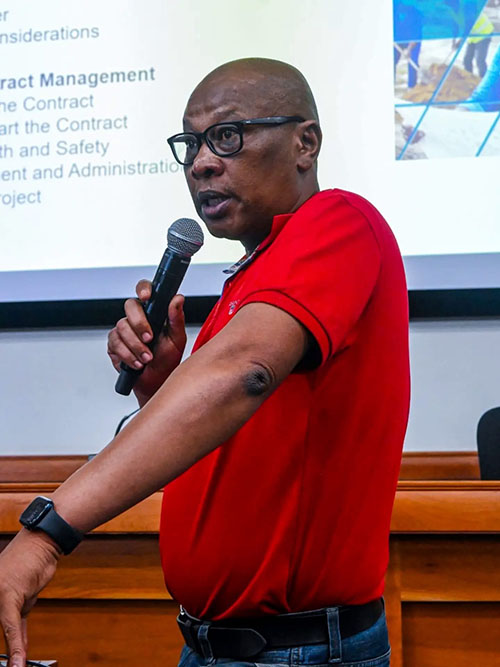 Alex Noholoza, CIDB representative.
Held at the Prestige Auditorium in the Dinokeng Building at the Pretoria Campus, the venture brought students and industry professionals together to share practical guidance on the transition from university to the workplace.
Delivering the keynote address, Bongani Dladla, Chief Executive Officer of the Construction Industry Development Board (CIDB), highlighted the qualities young professionals need to build successful careers in the engineering and construction sectors.
The initiative was spearheaded by student chapters of the South African Institution of Civil Engineering (SAICE) and the South African Institute of Electrical and Electronic Engineering (SAIEE), with support from Student Governance and Leadership Development, the Alumni Relations and Fundraising Office, and TUT FM.
By bringing industry professionals into direct conversation with students, the project provided aspiring engineers with an opportunity to gain a deeper understanding of workplace expectations, professional responsibilities and the challenges they may encounter as they enter their respective industries.
Dladla encouraged students to look beyond simply securing their first jobs and instead consider how they could use their professional skills to solve real-world problems and make a meaningful contribution to society. Drawing on his industry experience, he stressed that while academic performance remains important, employers also value integrity, a strong work ethic, respect for colleagues and the ability to deliver results.
 Tebogo Montoedi Kwinda, PPS financial Advisor.
His message reinforced the importance of preparing engineering students for more than the technical demands of their qualifications. Understanding professional responsibility, recognising industry challenges and exploring entrepreneurial opportunities are equally important as graduates transition into the world of work.
Shalate Davhana, Manager of Alumni Relations and Fundraising, commended the student organisers for identifying a need among their peers and creating a platform for meaningful engagement with industry. She also highlighted employer feedback indicating that TUT graduates have strong academic foundations but could further strengthen practical workplace skills, particularly in professional conduct, communication and the application of classroom knowledge in professional environments.
The programme extended beyond career readiness to include financial preparedness and entrepreneurship. PPS financial adviser Tebogo Montoedi Kwinda guided students on investment decisions and financial planning.
 Engineering Student.
CIDB representative Alex Noholoza presented Contractors 101, covering contractor registration, business compliance, financial management, tendering and project management.
Personal safety also formed part of the programme, with the South African Police Service representatives Constable Vuma and Detective Mabunda addressing issues including scams, vehicle-related crime and gender-based violence.
The Work Readiness Project demonstrated the value of collaboration between students, the University and professional bodies in preparing future engineers for life beyond the classroom. Through practical industry exposure, students were equipped with broader knowledge of professional conduct, financial preparedness, entrepreneurship and personal safety, helping them approach their careers with greater awareness of both workplace expectations and the contribution they can make to their industries and communities.
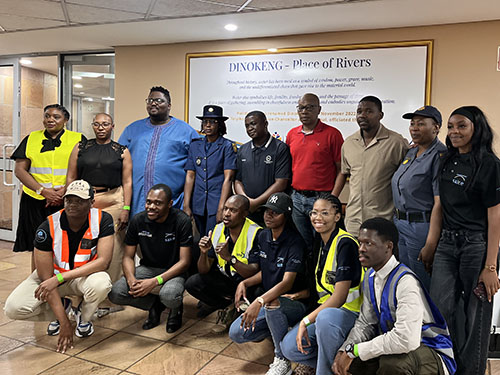 CIDB CEO, Bongani Dladla, with SAPS members and TUT Representatives.
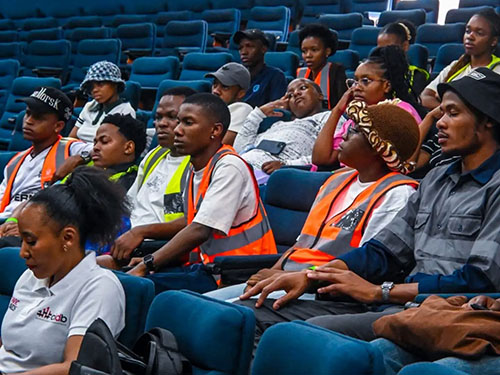 Participants
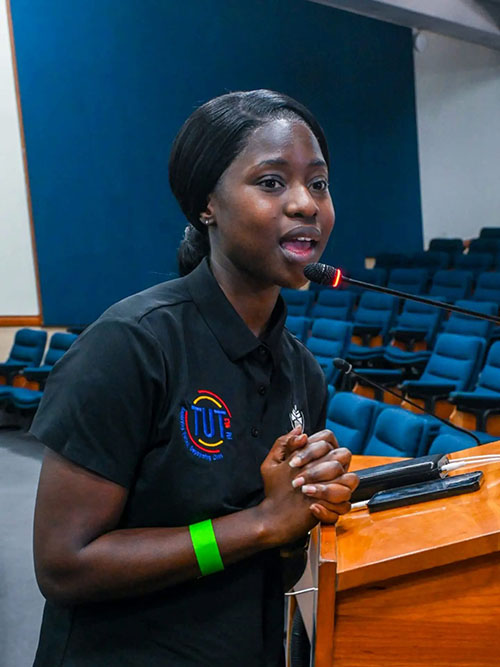 Tinswalo Mnisi