TUT celebrates Science staff on UNESCO and UN International Day of Women and Girls in Science
Academics
11 February 2026
International Day of Women and Girls in Science: From Vision to Impact
International Day of Women and Girls in Science, observed annually on 11 February and led by UNESCO and UN Women, recognises the essential contribution of women to scientific progress and calls for the removal of barriers that limit their full participation in STEM fields. Established in 2015, the day highlights the link between inclusive science, innovation and sustainable development.
Globally and in South Africa, women remain underrepresented in many STEM disciplines and in research leadership roles. For South Africa, this challenge is deeply connected to historical inequalities as well as the need for science that is socially responsive, inclusive and capable of addressing national priorities such as food security, environmental sustainability, public health and economic development.
The 2026 theme, “From Vision to Impact: Redefining STEM by Closing the Gender Gap,” closely aligns with the Tshwane University of Technology (TUT) Institutional Strategic Plan 2026–2035, which emphasises transformation, inclusive excellence and the development of human capital that is responsive to societal and industry needs. Advancing gender equity in science is central to TUT’s commitment to producing impactful research, strengthening postgraduate success and broadening participation in knowledge production.
Within this strategic framework, the Faculty of Science advances the ISP through the development and support of women academics and researchers, inclusive postgraduate supervision and mentorship, as well as research that is grounded in South African contexts while contributing to global knowledge. In promoting this commitment, the Faculty actively supports initiatives that strengthen the pipeline of women researchers in STEM, including the Women in Science: Emerging Researchers (WiSER) programme. The WiSER programme provides structured mentorship, peer networking and capacity-building opportunities for early-career women researchers, enabling them to build research confidence, expand scholarly output and develop leadership capability.
As the Tshwane University of Technology advances towards its 2035 vision, the Faculty of Science is committed to creating an enabling environment in which women in science can thrive across the full academic pipeline. This commitment is reflected in the Faculty’s current profile, which includes 55% (60 of 109) of the permanent research and instructional staff members holding doctoral qualifications being women, as well as 63.4% of the total student headcount being female (6 610 female students within a total student headcount of 10 420).
By integrating gender equity into research strategy, academic development and institutional culture, the Faculty ensures that excellence and transformation are not competing priorities, but mutually reinforcing imperatives. Celebrating women in science is therefore not a once-off event, but an ongoing commitment to inclusive excellence, impactful research and sustainable societal development, in direct support of the Institutional Strategic Plan 2026–2035.
The following profiles of 5 remarkable women scientists illustrate how the Faculty is translating institutional vision into measurable impact through leadership, innovation and community-engaged science.
Researcher, educator, conservation geneticist: Prof Tshifhiwa Constance Nangammbi comments on International Day of Women and Girls in Science
As the world marks International Day of Women and Girls in Science, proclaimed by UNESCO and UN Women to recognise and advance the participation of women in STEM fields, the career of Prof Tshifhiwa Constance Nangammbi is a powerful South African example of scientific excellence, leadership and impact.
Prof Nangammbi is a distinguished Associate Professor and researcher in the Department of Nature Conservation at TUT. A Fulbright Scholar and registered Professional Natural Scientist with the South African Council for Natural Scientific Professions, her work bridges molecular genetics, parasitology and biodiversity conservation to address critical environmental and public health challenges facing South Africa and the continent.
She holds a PhD in Zoology from the University of KwaZulu-Natal and is internationally recognised for her expertise in molecular systematics. Her foundational research on the phylogeny of southern African pheasant shells has made lasting contributions to global scientific knowledge, with data deposited in repositories such as GenBank and the World Register of Marine Species.
Her current research portfolio reflects the interdisciplinary and socially responsive nature of modern science.
Prof Nangammbi focuses on One Health themes including tick-borne diseases, invasive species ecology and zoonotic parasites. As a principal investigator and supervisor, she mentors postdoctoral fellows, PhD and MSc students working on topics ranging from environmental DNA surveillance of pathogens to the ecological dynamics of freshwater molluscs. This work has resulted in a strong body of peer-reviewed publications in respected journals such as Parasitology Research, Diversity and Veterinary Sciences, contributing directly to evidence-based conservation and health policy.
Her excellence has been recognised through prestigious national and international funding. She is a recipient of the SA/USA Biodiversity on a Changing Planet Award jointly supported by the National Research Foundation and the National Science Foundation, while she previously held a Fulbright Postdoctoral Research Scholarship at the Field Museum of Natural History in Chicago.
Beyond research, Prof Nangammbi is deeply committed to teaching and transformation in science. She has developed curricula and established Molecular Genetics Laboratories at multiple universities, broadening access to advanced scientific training. Her passion for science education extends into communities through initiatives such as co-authoring children’s books like Tiko the Brave Little Tick, aimed at sparking scientific curiosity from an early age.
Her leadership also informs national decision-making. She has served on the South African Minister of Environment’s High-Level Panel reviewing policies on iconic species such as elephants, lions and rhinos, and is an active member of professional bodies including the Parasitological Society of Southern Africa and the Zoological Society of Southern Africa.
On International Day of Women and Girls in Science, Prof Nangammbi’s career reflects the vital role South African women play in advancing knowledge, mentoring future scientists and shaping sustainable solutions for society.
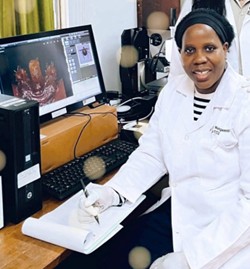 “International Day of Women and Girls in Science reminds us that science in South Africa is strongest when it reflects the full diversity of our people. As women scientists, our perspectives, resilience and commitment to community-centred research are essential in building knowledge that serves both society and the environment.”
Postdoctoral Research Fellow advancing Ethnomedicinal research: Dr Mokgadi Precious Mphahlele
As the world marks International Day of Women and Girls in Science, the work of Dr Mokgadi Precious Mphahlele reflects the vital role South African women scientists play in advancing knowledge, innovation and community-centred research. Dr Mphahlele is a postdoctoral research fellow in the Phytomedicine and Herbal Drugs Research Unit within TUT’s Department of Pharmaceutical Sciences, where her research bridges modern analytical chemistry and indigenous knowledge systems.
Holding a PhD in Chemistry with a background in Analytical Chemistry, Dr Mphahlele’s work focuses on the scientific validation of ethnomedicinal uses of African medicinal plants. Her research seeks to identify and characterise the phytochemicals responsible for the therapeutic effects long recognised in traditional healing practices, contributing to evidence-based healthcare solutions rooted in African contexts.
Her passion for medicinal plants was shaped by her upbringing in a rural community, where elders relied on plant-based remedies to treat common ailments. This lived experience inspired her scientific journey and informs her commitment to research that respects cultural heritage while applying rigorous modern analytical techniques. Through her work, she contributes to the preservation of indigenous knowledge while advancing its relevance within contemporary pharmaceutical science.
Beyond the laboratory, Dr Mphahlele is deeply engaged in science communication, mentorship and community development. She serves as an Ambassador for the Organization for Women in Science for the Developing World South Africa Chapter, is a member of Black Women in Science and acts as a judge for the Eskom Young Scientist competitions. As a dedicated STEM advocate, she delivers motivational talks and science demonstrations to high school learners, encouraging young people, particularly girls, to pursue careers in science.
Her growing leadership in the scientific community was also recognised through a nomination by the National Research Foundation to attend the Global Young Scientist Summit 2026, hosted by the National University of Singapore. The summit convenes emerging scientists and Nobel Laureates to foster mentorship, global collaboration and leadership in science, further positioning South African researchers within international scientific networks.
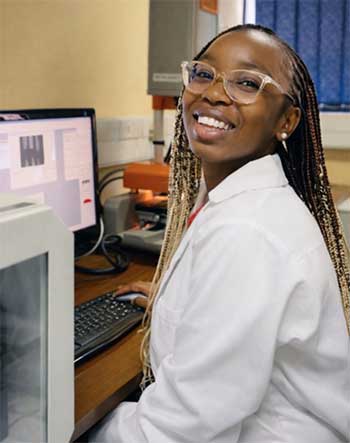 “As a South African scientist, International Day of Women and Girls in Science is very personal to me. Growing up in a rural community where traditional medicinal knowledge was part of everyday life, I learned early on that science begins with curiosity and lived experience. This day reminds us that when South African women and girls are given equal access to opportunities in science, we honour our roots while building a more inclusive and innovative future for our country.” - Dr Mokgadi Precious Mphahlele
Driving food security through Science: Dr Ndivho Nemukondeni
As South Africa joins the global community in commemorating International Day of Women and Girls in Science, the career of Dr Ndivho Nemukondeni highlights the essential role women scientists play in advancing food security, sustainable agriculture and inclusive scientific leadership. Dr Nemukondeni is a Lecturer in the Department of Animal Sciences at TUT, having joined the institution in April 2024.
She is a registered Natural Scientist (Cert.Sci.Nat.) with the South African Council for Natural Scientific Professions and a full member of the South African Society for Animal Science. Her academic and professional journey reflects a strong commitment to applied science and capacity development within South Africa’s agricultural sector. After completing her National Diploma in Agriculture (Animal Production) cum laude in 2012, she gained valuable industry experience as an intern at Boerekoperasiebeberk Limited in Gqeberha. In 2015, she joined the Agricultural Research Council – Animal Production Institute as a National Research Foundation intern and research assistant, further strengthening her research foundation.
Dr Nemukondeni continued her academic development through postgraduate studies at the University of South Africa, where she completed her BTech in Agricultural Management, followed by an MSc in Agriculture (Animal Science). She was appointed as a Junior Lecturer in 2017 and later promoted to Lecturer after completing her Master’s degree in 2019. She obtained her PhD in Agriculture (Animal Science) during the Spring graduation ceremonies of 2023.
Her doctoral research, titled “The Use of South African Sorghum Cultivars as an Alternative Energy Source for Indigenous Boschveld Chickens”, made a significant contribution to the poultry science knowledge base. Through evaluating three locally produced sorghum varieties at varying inclusion levels as substitutes for maize, her research demonstrated that sorghum could replace maize as an energy source without adverse effects on growth performance, carcass characteristics, blood parameters, or gut health. This work directly supports climate-resilient agriculture and local feed production, while reducing reliance on water-intensive crops. Her findings were disseminated through peer-reviewed publications in DHET-accredited journals, as well as international and local conference presentations. The research was funded by the National Research Foundation and the German Academic Exchange Service through an in-country scholarship.
Dr Nemukondeni’s current research focuses on enhancing poultry production systems to improve food security, stimulate economic growth and uplift the livelihoods of emerging and smallholder farmers. A central aspect of her work is the investigation of drought-tolerant alternative feed ingredients that optimise nutrient utilisation, improve poultry health and welfare and reduce dependence on conventional feed sources. Her research has clear societal relevance, contributing to improved access to affordable, high-quality protein, reduced food insecurity, and lower production costs for small-scale producers.
Equally important is her commitment to transformation and inclusion in science. Through mentorship and inclusive supervision, Dr Nemukondeni actively supports the development and empowerment of women and students from historically disadvantaged backgrounds, ensuring that agricultural science in South Africa reflects the diversity of the communities it serves.
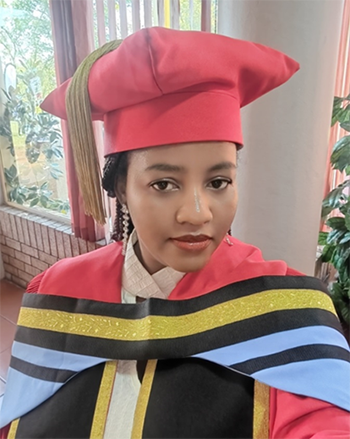 “International Day of Women and Girls in Science reminds us that scientific progress must be inclusive and socially responsive. When women are empowered to lead research that addresses food security and sustainability, we not only strengthen science, but also create lasting impact for families, communities and future generations.” - Dr Ndivho Nemukondeni
Celebrating a rich legacy of indigenous plant research: Prof Riana Kleynhans
As South Africa marks International Day of Women and Girls in Science, the career of Prof Riana Kleynhans is an example of the impact of sustained scientific inquiry, mentorship and collaboration over time. With a research journey spanning more than 35 years, Prof Kleynhans has made significant contributions to horticultural science, particularly in the propagation, cultivation and value-chain development of indigenous plants.
Prof Kleynhans is based at TUT’s Department of Horticulture, where she joined the institution in 2013 and was appointed as a lecturer. Her academic foundation lies in plant breeding and genetics, having completed her BSc Agric and Honours degrees at the University of Pretoria. She began her research career in 1991 at the Agricultural Research Council, marking the start of a lifelong engagement with applied agricultural research.
She completed her Master’s degree in Genetics in 1998 and her PhD in Genetics in 2014 at the University of the Free State. During her time at the Agricultural Research Council, Prof Kleynhans played a leading role in the development of new indigenous flower bulb cultivars, specifically Lachenalia. Her work resulted in the registration of seven new cultivars and the development of propagation, cultivation and forcing technologies essential for commercialisation and the establishment of sustainable value chains.
This intensive work with a single indigenous crop shaped her holistic research approach and laid the groundwork for her later focus on medicinal plants. In 2010, she transitioned her research towards medicinal plant species, applying the value-chain and technology-development expertise gained from her flower bulb research. This focus continued and expanded during her tenure at TUT, where many of her projects have been supported through external funding and collaborative agreements with institutions such as the University of Pretoria, the University of South Africa, the South African National Biodiversity Institute and the Agricultural Research Council.
Central to Prof Kleynhans’ academic career is her commitment to postgraduate training and mentorship. She has supervised 17 Master’s and five Doctoral students to completion, most of whom have conducted research on indigenous plant species. Her research outputs include approximately 50 peer-reviewed publications and numerous scientific presentations, reflecting both depth and continuity in her scholarly work.
Beyond academia, Prof Kleynhans is also committed to the practical transfer of scientific knowledge to communities. She has worked closely with organisations such as the Mothong African Heritage Trust in Mamelodi, supporting community-based initiatives focused on the cultivation of medicinal plants. By transferring developed protocols directly to growers, she ensures that research outcomes translate into tangible social and economic benefits.
On International Day of Women and Girls in Science, Prof Kleynhans’ journey underscores the importance of perseverance, collaboration and knowledge-sharing in building impactful scientific careers and inclusive research ecosystems.
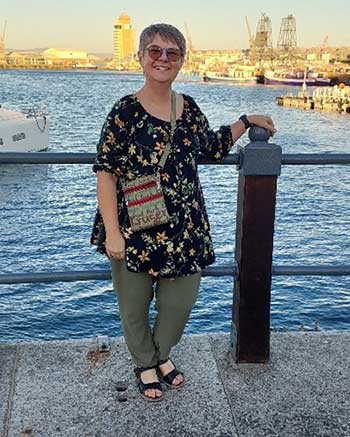 “Thirty-five years in research has taught me that no scientific journey is walked alone. Mentorship, collaboration and a willingness to keep learning are essential, but equally important is sharing knowledge in practical ways that help communities grow. This is how science becomes meaningful and sustainable.” - Prof Riana Kleynhans
Chemistry with purpose: Masemola Lethabo drives change in Women’s Health
Masemola Lethabo is a dedicated master’s student in Chemistry at the Tshwane University of Technology, where her work reflects the growing impact of women advancing scientific knowledge for societal benefit. Supervised by Prof Jaqueline Tembu, Prof Clemence Tarirai and Prof Xavier Siwe-Noundou, Lethabo’s academic journey is marked by excellence, purpose and resilience.
Her achievements include receiving the prestigious James Moir Medal in 2020 for outstanding performance during her BTech studies. In 2023, she was awarded the Nurturing Emerging Scholarship Programme (NESP) to support her Master’s research entitled Phytochemical Investigation and Biopharmaceutical Profiling of Secondary Metabolites from Pappea capensis for Anticancer Properties.
Lethabo’s research centres on the isolation and efficacy testing of bioactive compounds from medicinal plants, with the aim of developing sustainable therapeutic agents. Her work specifically targets aggressive triple-negative breast cancer, a disease that disproportionately affects Black and Asian women, placing her research at the intersection of science, health equity and social justice. In this way, her work contributes directly to Sustainable Development Goal 3, which promotes good health and well-being.
She has presented her research at several scientific conferences and has been recognised with multiple awards, including third place for Poster Presentation at the SACI North Section Young Chemists’ Symposium in 2024, Best Oral Presentation (Master’s Student) at the TUT Faculty of Science Research Day in 2025 and second place for Oral Presentation at the SACI North Section Young Chemists’ Symposium in 2025 in the MSc category.
Beyond the laboratory, Lethabo is committed to community engagement, participating in judging science competitions and communicating scientific concepts to young learners. As we celebrate Women in Science, her journey highlights the importance of resilience, a positive mindset and teamwork in overcoming challenges. Looking ahead, Lethabo aspires to pursue a PhD and build a career in academia, contributing to the development of future scientists and advancing knowledge that serves society.
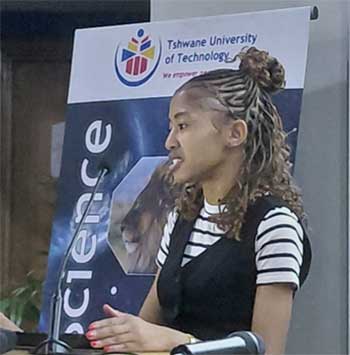 “As a woman in chemistry, Women in Science Day affirms that our perspectives matter. It motivates me to use science with purpose – to develop knowledge that addresses real health challenges women face, while inspiring future generations to believe they belong in science.” - Masemola Lethabo
Championing environmental health and African narratives: Dr Mercy Sepadi
Dr Mercy Sepadi, PhD, is a Lecturer in the Department of Environmental Health at the Tshwane University of Technology (TUT) and a registered Environmental Health Practitioner with the Health Professions Council of South Africa (HPCSA). With more than 13 years of experience spanning academia, local government and industry, she has built a career rooted in advancing environmental and occupational health, particularly within informal and vulnerable communities.
She holds a PhD and a Master’s degree in Public Health from the University of Johannesburg, alongside qualifications in Environmental Health, an MBA from TUT and a Professional Teachers Education degree from Haaga-Helia University of Applied Sciences. This multidisciplinary academic foundation reflects her holistic approach to science—bridging research, leadership, education and community empowerment.
Dr Sepadi’s research focuses on environmental and occupational health in informal settings, with particular emphasis on air pollution exposure, climate change, environmental health surveillance and the health and safety of informal workers. Her work contributes to policy-relevant public health discourse and has been widely published in accredited national and international journals. She has also contributed to book chapters, expanding the reach and impact of her scholarship.
With 192 Google Scholar citations and an h-index of 9, Dr Sepadi’s growing research influence reflects both the relevance and urgency of her work in addressing environmental risks affecting vulnerable populations.
In February 2026, she extended her contribution to knowledge and identity-building beyond academia through the authorship and self-publication of two culturally grounded children’s books: Shopi the Light of the Family (Lebone) and Shopi’s World – Colour and Learn with Me. These works aim to promote identity, learning and authentic African childhood narratives, demonstrating her commitment to shaping both present and future generations.
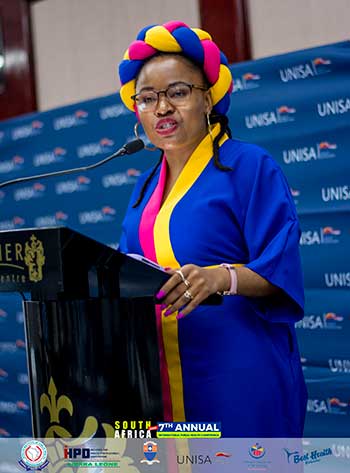 Beyond her academic achievements, Dr Sepadi is deeply committed to community engagement and science outreach. She is actively involved in postgraduate supervision at Honours, Master’s and PhD levels across multiple institutions, mentoring emerging researchers and strengthening the next generation of environmental health professionals.
"Women in Science Day reminds me that science is not only about discovery, but about responsibility. It is about using knowledge to uplift communities, protect the vulnerable and inspire young girls to see themselves as scientists and changemakers." - Dr Mercy Sepadi