Tshwane Varsity Hackathon sparks innovation for a smarter Tshwane
Academics
30 September 2026
By Thembeka Manetje
The eighth annual Tshwane Varsity Hackathon (TVH) once again brought together some of the brightest young minds from universities across Tshwane for an immersive experience focused on innovation, collaboration and problem-solving.
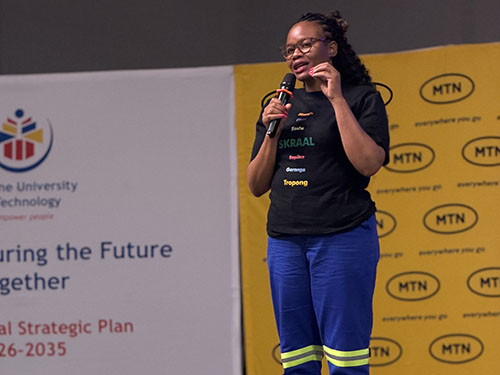 Dr Nasiphi Moya
Hosted by the Tshwane University of Technology’s (TUT) Faculty of Information and Communication Technology (ICT) at the Ga-Rankuwa Campus, the hackathon challenged students to move beyond theoretical concepts and develop practical, technology-driven solutions to address real challenges faced by residents of the City of Tshwane.
Dr Nasiphi Moya
Hosted by the Tshwane University of Technology’s (TUT) Faculty of Information and Communication Technology (ICT) at the Ga-Rankuwa Campus, the hackathon challenged students to move beyond theoretical concepts and develop practical, technology-driven solutions to address real challenges faced by residents of the City of Tshwane.
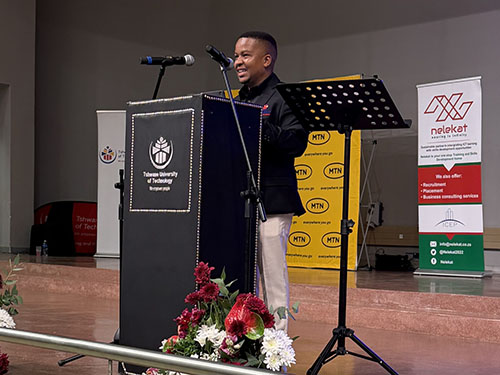
At the heart of the event was a powerful message from TVH Chief Organiser and Faculty of ICT lecturer, Quintin Magaseng: “Technology alone is not enough. It is only valuable because of the people who develop it.” This sentiment captured the essence of the hackathon, highlighting that while technology provides the platform, it is human creativity, collaboration and innovative thinking that drive meaningful change.
The initiative reflects TUT’s commitment to producing future-ready graduates equipped not only with technical expertise, but also with the critical skills required to communicate effectively, collaborate across disciplines, adapt to changing environments and solve complex real-world problems.
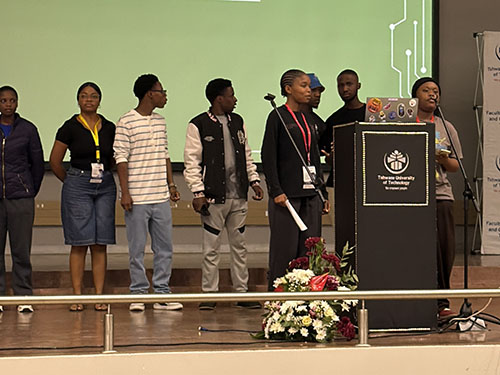 Student hackers presenting their innovative solutions.
Students were encouraged to view the hackathon as more than a competition. Working alongside peers from diverse backgrounds, many of whom met for the first time, participants were challenged to listen to different perspectives, test ideas, respond to feedback and transform concepts into viable solutions.
Student hackers presenting their innovative solutions.
Students were encouraged to view the hackathon as more than a competition. Working alongside peers from diverse backgrounds, many of whom met for the first time, participants were challenged to listen to different perspectives, test ideas, respond to feedback and transform concepts into viable solutions.
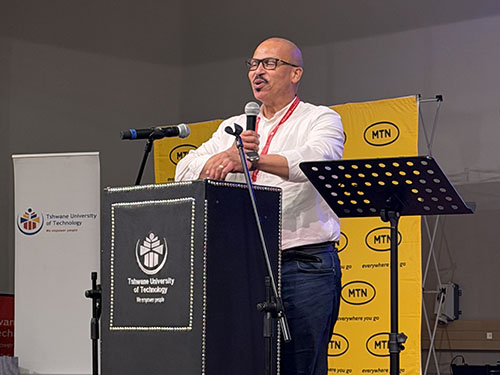
The event also showcased the importance of collaboration between academia, government and industry. During the opening programme, Isaiah Engelbrecht, Divisional Head of Innovation and Knowledge Management at the City of Tshwane, highlighted how each sector contributes unique strengths to innovation and development. He noted that industry brings market expertise, government provides insight into societal challenges, and universities contribute research, knowledge and innovation.
“This collaborative ecosystem is particularly important in building a smart city that does not simply adopt technology but continuously learns and innovates in response to the needs of its people,” Engelbrecht said.
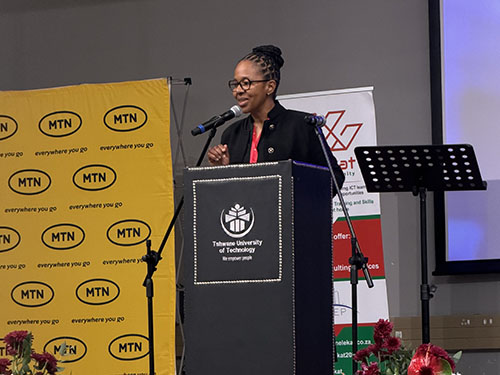 Dr Rita Raseleka
The hackathon also brought TUT’s vision of an entrepreneurial university to life. Student teams were challenged not only to identify problems but also to develop creative, practical and sustainable solutions. From conceptualisation to the final seven-minute pitch, participants experienced the realities of transforming ideas into projects with the potential to create meaningful impact.
Dr Rita Raseleka
The hackathon also brought TUT’s vision of an entrepreneurial university to life. Student teams were challenged not only to identify problems but also to develop creative, practical and sustainable solutions. From conceptualisation to the final seven-minute pitch, participants experienced the realities of transforming ideas into projects with the potential to create meaningful impact.
The involvement of academic leaders, industry partners, mentors and adjudicators provided students with valuable exposure to the broader innovation and entrepreneurship ecosystem, offering insights into the support structures that help turn ideas into successful ventures.
Importantly, the message throughout the event extended beyond winning. Dr Rita Raseleka, TUT’s Director of Research and Innovation, encouraged participants to continue refining and developing their ideas, regardless of the competition outcome. She emphasised that the learning gained throughout the process forms a valuable part of their innovation journey.
By the final day, the energy and enthusiasm of the hackathon had translated into tangible solutions. Teams presented innovative responses to real-world challenges identified by the City of Tshwane, demonstrating how technology, creativity and collaboration can be leveraged to make a meaningful difference in communities. Ten teams advanced to the final round, with Groups 15, 5, 4, 11 and 1 securing places among the top five finalists.
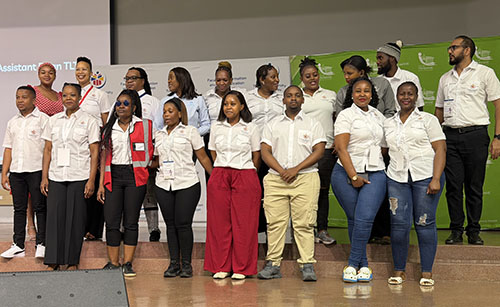 TVH organising team.
The event was further strengthened by the presence of Dr Nasiphi Moya, Executive Mayor of the City of Tshwane, who commended students for their commitment to innovation, creativity and active participation.
TVH organising team.
The event was further strengthened by the presence of Dr Nasiphi Moya, Executive Mayor of the City of Tshwane, who commended students for their commitment to innovation, creativity and active participation.
From the opening keynote address and student performances to intense collaboration sessions, final presentations and expert feedback, TVH 2026 proved to be much more than a hackathon. It served as a dynamic learning environment where students gained practical experience, tested solutions against real-world challenges and connected innovation with purpose.
Through initiatives such as the Tshwane Varsity Hackathon, TUT continues to create opportunities for students to develop into confident problem-solvers, innovators and entrepreneurial thinkers ready to make a lasting impact in Tshwane, South Africa and beyond.
 Isaiah Engelbrecht
 Quintin Magaseng