Ronnie Mamoepa: Eloquent voice of the transition who made government speak clearly to the people – the ultimate public servant
Academics
13 November 2026
By Professor Mashupye H Maserumule
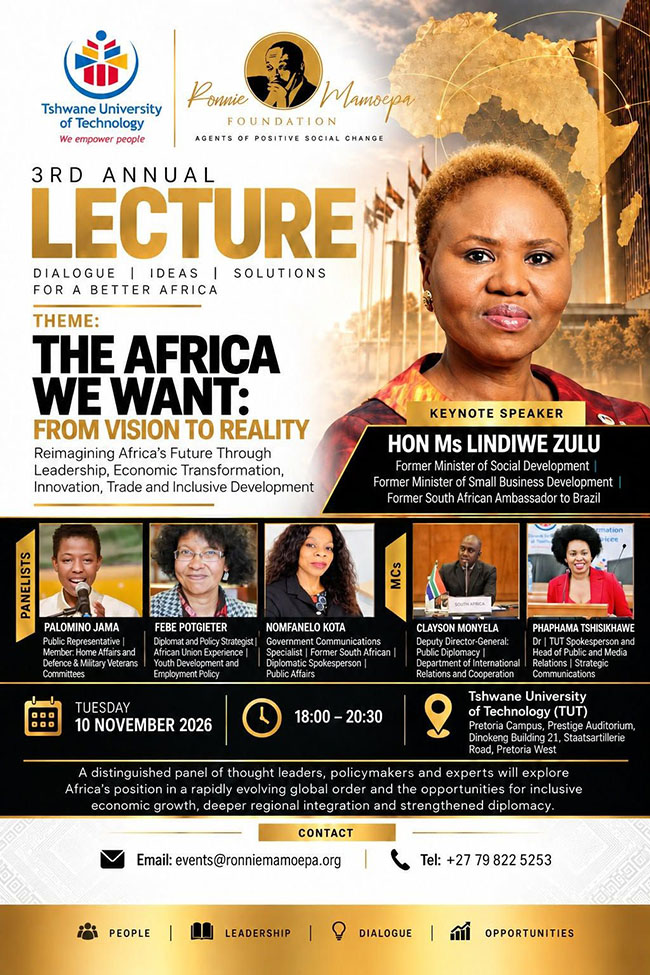
In partnership with the Ronnie Mamoepa Foundation, the Tshwane University of Technology hosted the 3rd Annual Ronnie Mamoepa Lecture on 10 November 2026, continuing to honour his legacy as a lens for dialogue, reflection, and education.
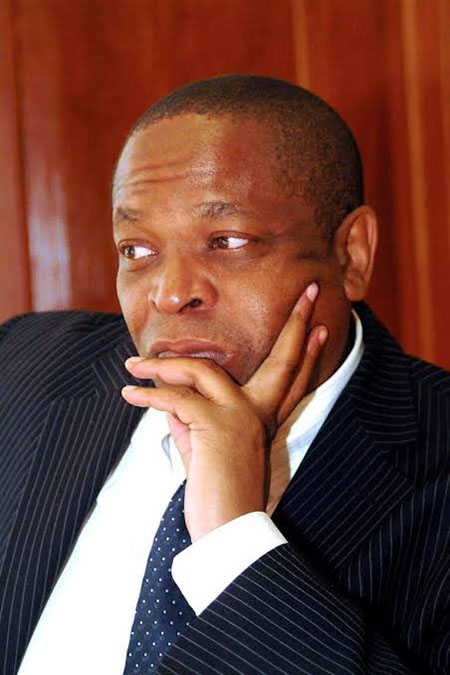 Each time remembering him in this way inevitably brings to mind how he became a voice whose eloquence wove the verbiage of a nation in transition, clarifying uncertainties as South Africa navigated the complex history of its divided past to usher in a democratic future for the country. He gave language to a foundational sentiment of a country in tryst with destiny: “South Africa belongs to all who live in it, united in diversity”. His voice conveyed this message with such profound simplicity that everybody could understand that apartheid was being dismantled to make way for democracy.
Thus, Ronnie was not simply a communicator; he was a communicator with a purpose. A raconteur with extraordinary skill in harnessing the power of communication, which he used adroitly, especially during the anxiety-filled period of transition. And this was to the extent of significantly contributing to changing the mindset of many, particularly the descendants of those who designed the apartheid system, as they themselves ultimately began to find the courage to say that "yesterday is a foreign country and tomorrow belongs to us." This is the power of purposeful communication, which we often overlook when we write history, especially of South Africa, and yet we had Mamoepa, whose legacy embodied profound lessons about what it means to communicate.
Ronnie was good at his craft, always driven by zeal, and refined by the guidance of numerous mentors and the various strategic roles he undertook. Key among his contributions were helping to develop and implement the communication strategy for Nelson Mandela's historic release from prison. He served on the media team of the body established to manage this – Mandela’s release from prison - including introducing him to both the South African public and the global media, effectively showcasing the vision for a democratic transition. Such a body was called the National Reception Committee.
Mandela became the first black president of the Republic of South Africa after the 1994 elections. Mamoepa emerged as a key voice during Mandela’s presidency. His voice in communicating government messages always reinforced Madiba’s pursuit of national reconciliation. And Mamoepa did this fantastically. It is no surprise that, upon his passing, the Nelson Mandela Foundation formally honoured him for his "engaging warmth, generosity of spirit, and passion for his work." The South African Association of Public Administration and Management (SAAPAM) also recognised him posthumously with the Public Service Award for his selfless dedication to the public good. Mamoepa has been one of post-apartheid South Africa's most respected public servants, significantly influencing government communication and information systems, simplifying government messaging for an informed citizenry.
He worked not only with Mandela but also with all who came after him, whether before they themselves became presidents of the country or while they were in the highest office in the land.
Scholarship has a responsibility to ensure that the legacy of people like Mamoepa serves as a guiding light in shaping our historical consciousness and our creative vision for the desired future. Hence, public lectures, such as the ones that the Tshwane University of Technology hosts, in partnership with the Ronnie Mamoepa Foundation, are a powerful way to preserve this heritage and to ensure that our stories, as told through the legacies of people like Mamoepa- their character, historical, and intellectual contributions become the central ontological narrative of our history. The book Like the Dean - Ronnie Mamoepa, comprising 35 tributes compiled by Professor Busani Ngcaweni, whom he edited, is an important intervention in this regard.
All in all, the book described Ronnie as a quintessential human being with exemplary character because he epitomised the best of humanity through the extraordinary prowess of his craft, including his selfless placing it at the nation's disposal. One of the greatest lessons that Ronnie’s legacy teaches us is that communication is not spin but a function of optimising human coexistence. For he knew that if people did not understand the vision, they did not understand each other and therefore could not act on it.
And that is why Ronnie Mamoepa’s 3rd Annual Lecture this year was themed The Africa We Want: From Vision to Action. It was intended to leverage his legacy to spark critical conversation about the state of Africa, where what came through clearly was that the continent does not lack vision. We have Agenda 2063 and the African Continental Free Trade Area (AfCFTA), among others. And here in South Africa, we have the National Development Plan (NDP), including the best Constitution in the world. And this is not us saying so, but others elsewhere. For example, when the American jurist Ruth Bader Ginsburg was asked by the Egyptians which constitutional model to look to, she said: “I would not look to the US (United States) Constitution, but that of South Africa…”
The fundamental pillars for building the future we desire have always been intact. However, what is causing the delay? Many argue that the main issue is a lack of action. The argument suggests that we are rich in vision but poor in action. We have policies for everything yet face no real consequences. Our continent is young, but our leadership is often outdated. Liberation movements have demonstrated great skill in mobilisation, but they continue to struggle with effective governance. We hear this often, and thus we must guard against it increasingly becoming a platitude before doing something about it.
The legacy of Ronnie prompts us to ask: How do we address our inaction? Perhaps the answer lies in who Ronnie was. At 19, he was detained on Robben Island, not only young in years but also young in character and in his illusion of being the youth of his time. However, he was wise beyond his years when it came to understanding the harsh realities of apartheid. He didn’t wait for permission to act; he simply acted. For he appeared to have lucidly understood the Martinican anti-colonial philosopher, Frantz Fanon, who, in his revolutionary masterpiece, The Wretched of the Earth, said: “Each generation must, out of relative obscurity, discover its mission, fulfil it, or betray it. He chose not the latter, but the former.
Throughout history, there have been important lessons on how to turn our visions into action, with young people playing a vital role in making those visions a reality, particularly in the struggles against colonialism and apartheid. Today, as we face the challenges of the 21st century in post-colonial Africa and post-apartheid South Africa, do we truly understand how to strategically invest in young people and empower them for the future? This includes leveraging their digital fluency to create the changes necessary for humanity to thrive. Isn’t this what Ronnie's legacy calls for?