President calls for stronger government-university partnerships to drive national development
Academics
16 November 2026
President Cyril Ramaphosa has called for stronger collaboration between government, universities and national science councils, emphasising the need to turn the country’s research, knowledge and innovation capabilities into practical solutions that support economic growth and improve people’s lives.
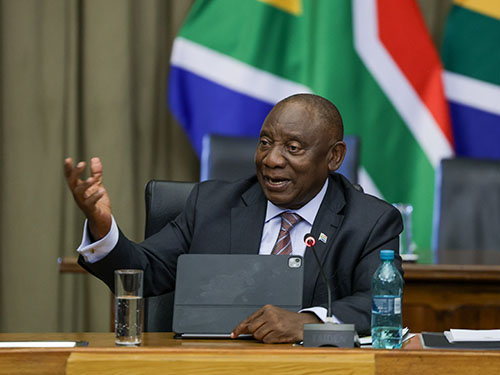 President Cyril Ramaphosa addresses Vice-Chancellors and Science Council leaders.
Addressing Vice-Chancellors and science council leaders at the Union Buildings, the President, accompanied by Science, Technology and Innovation Minister Prof Blade Nzimande and Higher Education Minister Buti Manamela, said South Africa must strengthen the strategic relationship between government and the research community to respond to pressing developmental challenges, build skills and accelerate innovation.
The engagement, held under the theme “Mobilising Universities and National Science Councils for the Developmental State, Economic Growth and the Skills Revolution”, comes at a critical point in the implementation of the National Development Plan 2030 and the Medium-Term Development Plan 2024–2029.
With the country facing an unemployment rate of 33.7%, persistent poverty, and some of the highest levels of inequality in the world, President Ramaphosa emphasised the need to mobilise the country’s intellectual and research capabilities to address pressing socioeconomic challenges.
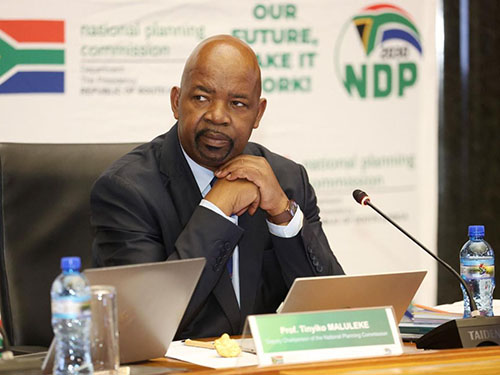 Vice-Chancellor and Principal Prof Tinyiko Maluleke.
He said universities were essential partners in building a developmental state, noting that countries that had successfully transformed their economies had placed knowledge at the centre of development by connecting higher education, research and industry.
“South Africa must be a producer, not merely a consumer, of emerging technologies,” he said, highlighting the importance of developing the country’s own artificial intelligence capabilities and strengthening its ability to build, govern and use data for the benefit of society.
The President identified several priority areas for collaboration, including skills development, water and energy security, industrialisation, critical minerals beneficiation and strengthening public sector capacity.
He called for universities, TVET colleges and Sector Education and Training Authorities to operate as an integrated skills development system, enabling young people to move more effectively from education into employment through expanded workplace-based learning.
He also stressed the importance of increasing investment in research and development, noting that South Africa’s spending currently stands at approximately 0.6% of GDP, well below the national target of 1.5% by 2030.
President Ramaphosa emphasised that closer collaboration must respect institutional autonomy, academic freedom and the independence of scientific research. He also highlighted the need to address the financial sustainability of higher education institutions, governance challenges and the mobilisation of private-sector investment. He called for the government to use public procurement more effectively, positioning the state as an early customer for locally developed innovations.
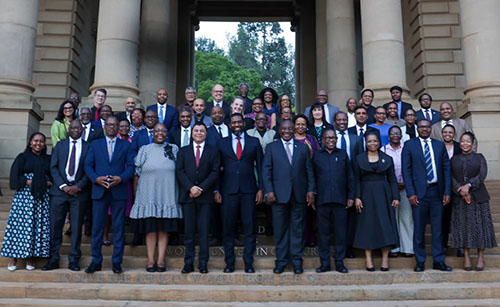 Vice-Chancellors and Science Council leaders attending the address by the President.
The President expressed confidence in South Africa’s universities, science councils and youthful population, describing their knowledge, skills and research capabilities as significant national assets.
He urged stakeholders to translate the discussions into concrete commitments that would ensure research and innovation contribute directly to economic growth, job creation and improved public services.
In the Q&A session, the universities, represented by the Chair of Universities South Africa, Prof Francis Petersen, thanked the President and the Ministers for the timely conversation. They also pointed out the ongoing collaboration between local and international universities in addressing many of the priorities the President referred.
To address the unemployment crisis, several University Vice-Chancellors pointed out, amongst other things, the need for targeted partnerships with government, business, and industry, especially in the provision of work-integrated learning, entrepreneurship training, as well as an increased focus on innovation. There were also calls for a radical reimagination of the relationship between the higher education sector and the job market. Several Vice-Chancellors called for a similarly radical reset of the National Student Financial Aid Scheme to ensure the long-term sustainability of student funding.