Performance takes centre stage at Day 2 of TUT’s GBVF Symposium
Academics
6 August 2026
By Gerrit Bester
A live theatrical performance took centre stage at the Tshwane University of Technology’s (TUT) 3rd Annual Gender-Based Violence and Femicide (GBVF) Symposium on 6 August, demonstrating the power of art as a tool for activism, reflection and social change.
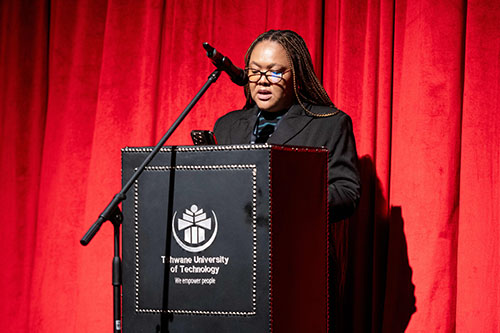
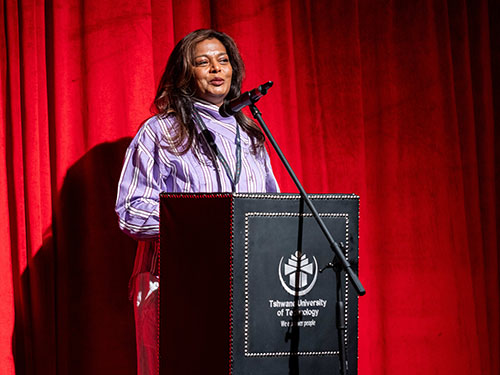 Prof Nalini Moodley
Held under the theme Resonant Voices: Artivism Against Silences, the symposium brings together close to 200 researchers, artists, students, policymakers and community stakeholders to explore innovative responses to GBVF through scholarship and creative practice.
Prof Nalini Moodley
Held under the theme Resonant Voices: Artivism Against Silences, the symposium brings together close to 200 researchers, artists, students, policymakers and community stakeholders to explore innovative responses to GBVF through scholarship and creative practice.
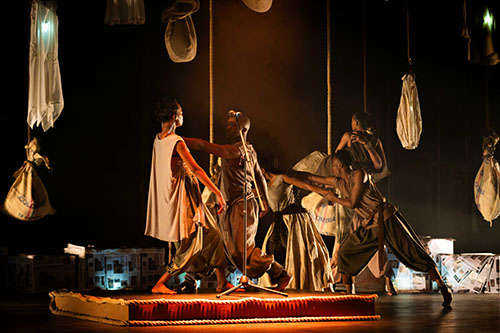
Day 2 opened at TUT’s Arts Campus before delegates travelled to the Breytenbach Theatre for what proved to be one of the event’s most distinctive and powerful moments. Rather than beginning with a conventional lecture-style keynote address, the symposium opened its keynote programme with a live theatrical performance titled Remnants.
Created through a collaboration between TUT and the University of Pretoria, the production positioned performance itself as a keynote intervention, reflecting the symposium’s commitment to artivism as both a research methodology and a form of social action.
The decision to begin the keynote programme with a performance reflects the symposium’s core belief that addressing GBVF requires more than policy discussions and academic debate. It requires experiences that engage audiences emotionally, intellectually and physically. Through choreography, movement, embodied storytelling and testimony, Remnants invited delegates to confront the realities of GBVF in ways that statistics and reports alone cannot achieve.
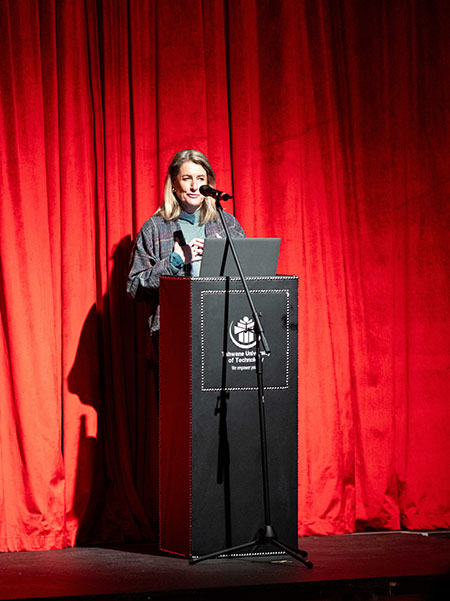 Nita van den Berg
The production explored what remains in and around the body after experiences of violence, including memory, fear, silence, resilience and survival. Drawing on survivor and perpetrator testimonies, the work used movement, sound and symbolic materials to examine how violence leaves lasting traces on individuals and communities. By foregrounding the body as a site of memory and testimony, the performance challenged audiences to consider both personal and collective accountability in confronting GBVF.
Nita van den Berg
The production explored what remains in and around the body after experiences of violence, including memory, fear, silence, resilience and survival. Drawing on survivor and perpetrator testimonies, the work used movement, sound and symbolic materials to examine how violence leaves lasting traces on individuals and communities. By foregrounding the body as a site of memory and testimony, the performance challenged audiences to consider both personal and collective accountability in confronting GBVF.
Following the performance, delegates engaged directly with the producers and cast of Remnants in a panel discussion that unpacked the creative process, themes and responsibilities involved in translating difficult lived realities into performance. The discussion highlighted the unique role that the arts can play in creating spaces for dialogue, reflection and social change.
Building on the themes explored in Remnants, the keynote session brought together voices from higher education, government and civil society, reinforcing the need for collaborative action.
Setting the tone for the symposium, Prof Nalini Moodley, Executive Dean: Faculty of Arts and Design, said: “GBVF may take place behind the closed doors of bedrooms and kitchens, but it is not a private matter. It is a profound social, cultural and human rights concern that demands a collective response. This is why our theme is so important. It calls upon us to break the silences that allow violence to remain hidden, to create spaces where experiences can be heard and to consider how art, research, education and activism can contribute to meaningful change.”
She added that despite GBV being declared a national disaster in November 2025 the statistics do not move the way we need them to. “The crime stats for the first quarter, January to March, indicate an increase in sexual assaults by 4.2% and attempted sexual assaults rose by 2%. During this period there were 9 782 rapes (108 per day); 4 620 of these occurring not in dark alleys by strangers but in homes by people known to the victim.”
Prof Moodley also pointed to the impact of Artificial Intelligence (AI) as a tool that perpetuates GBVF. This challenge, she said, introduces TFGBV, which stands for Technology-Facilitated Gender-Based Violence and is any act of violence or abuse directed at a person based on their gender and committed, assisted, or amplified using digital tools or the internet.
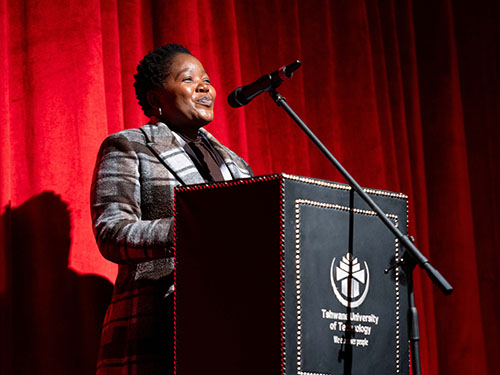 Cllr Palesa Modise
Delegates also heard welcome remarks from Nita van den Berg, Director: Accommodation, Residence Life and Catering, while the City of Tshwane’s Member of the Mayoral Committee for Community and Social Development Services, Cllr Palesa Modise, offered a message of support. Dr Yolanda van der Vyver, Editor of the South African Journal of Art and Architecture (SAJAA), highlighted the importance of ensuring that conversations emerging from the symposium continue to resonate through scholarly articles.
Cllr Palesa Modise
Delegates also heard welcome remarks from Nita van den Berg, Director: Accommodation, Residence Life and Catering, while the City of Tshwane’s Member of the Mayoral Committee for Community and Social Development Services, Cllr Palesa Modise, offered a message of support. Dr Yolanda van der Vyver, Editor of the South African Journal of Art and Architecture (SAJAA), highlighted the importance of ensuring that conversations emerging from the symposium continue to resonate through scholarly articles.
Sr Victoria Malatse, HOD: Health and Wellness at the TUT Ga-Rankuwa Campus, also addressed delegates, providing important context on the realities of GBVF and the need for sustained institutional responses that prioritise support, prevention and healing.
Beyond the keynote programme, the afternoon parallel sessions demonstrated the wide range of perspectives required to address GBVF meaningfully. Researchers and practitioners explored the societal conditions that sustain violence, including harmful cultural norms, workplace hostility, structural inequalities and community dynamics. Sessions examined healing through art, textiles and somatic therapy, while others focused on mentorship as activism, adaptive housing for survivors, embodied resistance through performance and reclaiming unsafe spaces.
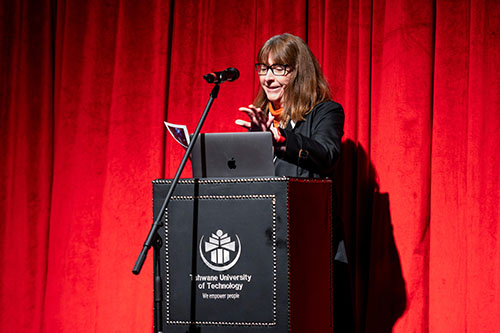 Dr Yolanda van der Vyver
Presentations also considered faith-based approaches to healing, digital activism, LGBTQIA+ experiences of stigma and belonging and women’s leadership in higher education.
Dr Yolanda van der Vyver
Presentations also considered faith-based approaches to healing, digital activism, LGBTQIA+ experiences of stigma and belonging and women’s leadership in higher education.
The diversity of topics underscored a central theme of the symposium: that GBVF cannot be understood through a single disciplinary lens, but must be addressed through collaborative engagement across health, education, the arts, social sciences, architecture, policy and community development.
Convened by the Research Niche Area: Artivism as a Tool to Combat Gender-Based Violence(s) in the Tshwane University of Technology’s Faculty of Arts and Design, the symposium is presented in collaboration with the South African Journal of Art and Architecture (SAJAA), the City of Tshwane and TUT’s Student Affairs and Extracurricular Development (SAED), which hosted the opening Student Engagement Day under the theme From Awareness to Action.
 Sr Victoria Malatse
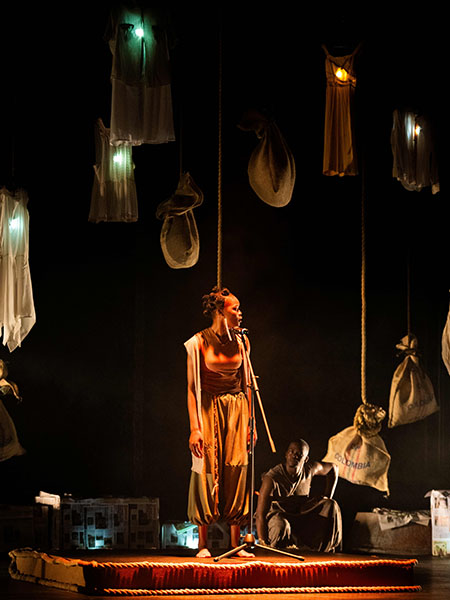

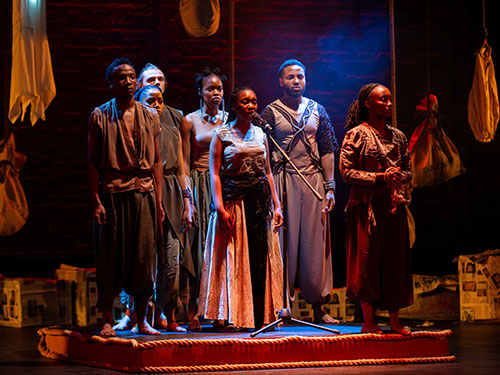
Scenes from Remnants, a powerful production created through a collaboration between the Tshwane University of Technology and the University of Pretoria.
PHOTOS: Nation Mangwane and Clement Mothiba