Orientation sparks bold thinking on technology and future of knowledge
Academics
29 April 2026
By Key Noluthando
“What do we do with the language of technology?” Prof Mashupye Maserumule, Executive Dean of the Faculty of Humanities at Tshwane University of Technology, opened the 2026 M and D Orientation Programme with this provocative question on language, technology and inclusion. His address set a thought-provoking tone, challenging postgraduate students to rethink the purpose of research in a fast-evolving digital world.
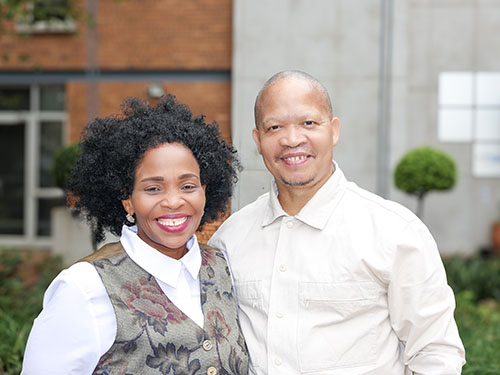 Prof Maserumule framed the programme around a central question: what do we do with the language of technology? He illustrated this with a simple example: a Venda speaker engaging with Siri* and finding no recognition of the language. The moment highlighted a gap between technological advancement and linguistic inclusion. He positioned this as a research opportunity urging students to interrogate whose knowledge is prioritised whose languages are recognised and whose realities shape innovation.
Prof Rasigan Maharajh, Professor of Public Affairs at TUT, expanded the discussion by situating it within a global context. He described the current era as a “polycrisis” marked by economic instability, geopolitical tensions, ecological strain and inequality. He challenged students to pursue research that is rigorous, socially responsive and committed to truth while contributing to the decolonisation of knowledge systems. He emphasised that questions of technology are also questions of power, access and global participation.
Several staff members from the Faculty of Humanities, Research and Innovation, Library Services, as well as Student Development and Support, addressed important topics relevant to M and D studies:
Prof Kholofelo Rakubu, Acting Assistant Dean, Postgraduate Studies, Research, Innovation and Engagement, introduced key research support structures to ensure students understand the available academic resources. The postgraduate registration office followed with guidance to support a smooth start to postgraduate studies.
Prof Witness Maluleke, an alumnus, shared practical insights on navigating postgraduate journeys, highlighting adaptability and persistence as key to success.
Prof Mzwamadoda Cekiso from the Department of Applied Languages, addressed supervisor–student relations, outlining principles for productive academic partnerships.
Prof Sibongile Mnisi, the Faculty Ethics Chair, reinforced the importance of integrity in research and ethical scholarship.
Library Services staff members, Lawrence Maake and Ms Busi Khumalo, guided students on journal selection, ethical publishing and understanding SANLiC Agreement journals.
Ms Nonofo Mabasa and Ms Ingrid Botha, who represented the Research and Innovation Office, spoke about funding opportunities and shared information to equip students with knowledge on scholarships and external support.
Ms Livhuani Nedzingahe, Statistical Analyst, highlighted the importance of analytical rigour and available statistical support services, while Dr Maria Mnguni, Head of Student Development and Support, Soshanguve Campus, addressed mental health and wellbeing, outlining support structures essential for postgraduate success.
Ms Lufuno Sinthumule, Director of Research and Innovation, introduced entrepreneurship and intellectual property, encouraging students to consider innovation pathways beyond academia. The Internationalisation Office also addressed opportunities that could open avenues for global collaboration.
Prof Bongazana Dondolo, Assistant Dean for Teaching and Learning, closed the programme by reinforcing its central message. He described the orientation as an intellectual invitation for students to question, challenge and contribute meaningfully to knowledge production.
The annual programme aims to equip Master’s and Doctoral students with practical tools and critical perspectives, positioning them to be active contributors in shaping the future. It left them with a defining question that continues beyond the classroom: what do we do with the language of technology and who gets to answer it?
* Siri is Apple's built-in, voice-activated virtual assistant that uses natural language processing and AI to perform tasks, answer questions, and control smart home devices across Apple devices like iPhones, Macs and HomePods. It enables hands-free operation to set reminders, send messages and search the web.