Open Access Week examines the cost of knowledge and research inequality
Academics
29 October 2026
By Nosipho Mnyandu
The rising costs of academic publishing and barriers to accessing scholarly research were among the key issues addressed during International Open Access Week 2026, held under the theme “The Cost of Knowledge”.
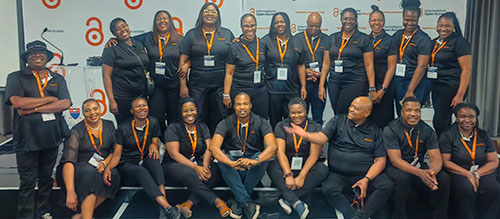 Delegates attending the Open Access Week event.
The event took place on 22 October 2026 at Protea Hotel in Menlyn, Pretoria, bringing together academics and representatives from higher education institutions to address issues surrounding open-access publishing, knowledge equity and the financial implications of disseminating research.
Tshwane University of Technology (TUT) was represented at the event by Prof Sibongile Mnisi, who delivered a presentation titled “Knowledge Inequity: How exorbitant paywalls and fees exclude individuals and institutions from equitable participation in science and research”, focusing on one of the central issues reflected in this year's theme.
The programme covered a range of issues in academic publishing, including the financial implications of open-access and subscription models, the dependence of academic research on unpaid peer review, and the environmental costs of scholarly publishing.
Dr Jean-Claude Malela Majika from the University of Pretoria discussed the costs, benefits and equity implications of open-access and subscription publishing, while Professor Everisto Benyera from the University of South Africa presented on academia's reliance on free peer review. Professor Mapaseka Seheri from Sefako Makgatho Health Sciences University addressed environmental and resource costs.
The event further included presentations on open-access publishing and the open-access landscape, alongside a virtual tour of the Sefako Makgatho University Library.
The discussions highlighted the relationship between the costs of producing and disseminating academic research and individuals' and institutions' ability to access scholarly knowledge. The issue is particularly relevant to researchers and postgraduate students who rely on academic publications to support their studies and research.
Through its participation, TUT contributed to a broader academic discussion on the financial and structural barriers affecting equitable participation in research and scholarly publishing.