New chapter for African Rail Development opens at inaugural Africa CRTS Training
Academics
8 June 2026
By Mosima Rafapa
Africa’s commuter rail future took centre stage in Johannesburg, with the Tshwane University of Technology (TUT) in partnership with the International Union of Railways (UIC) hosting the inaugural African Commuter and Regional Train Services (CRTS) Training. Global experts convened at the meeting to advance rail innovation, safety, passenger experience and modernisation for sustainable and reliable rail systems across the continent.
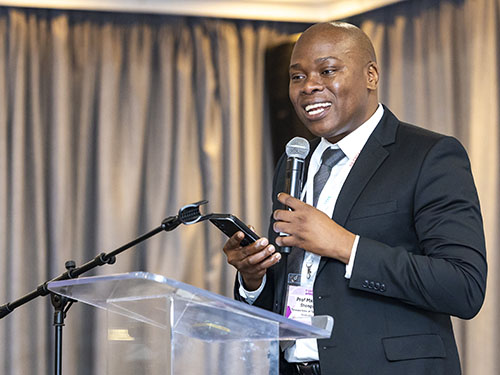 FEBE Executive Dean, Prof Mxolisi Shongwe, said bringing the CRTS Training to Africa after eight successful editions in Europe was both significant and timely.
During the three-day programme, railway operators, manufacturers, academics and industry experts from across Africa and beyond shared knowledge, strengthened partnerships and explored solutions for sustainable, reliable and passenger-focused rail systems.
FEBE Executive Dean, Prof Mxolisi Shongwe, said bringing the CRTS Training to Africa after eight successful editions in Europe was both significant and timely.
During the three-day programme, railway operators, manufacturers, academics and industry experts from across Africa and beyond shared knowledge, strengthened partnerships and explored solutions for sustainable, reliable and passenger-focused rail systems.
Prof Mxolisi Shongwe, Executive Dean of the Faculty of Engineering and the Built Environment at TUT, opened the programme and said bringing CRTS Training to Africa after eight successful editions in Europe is a significant milestone for TUT and Africa. He added that the initiative reflects growing recognition of Africa’s role in rail development.
"It signals a recognition that the future of rail development is closely connected to Africa's growth and transformation," he said.
Prof Shongwe added that hosting the programme on the continent created space to address Africa’s railway realities.
"It gives us the opportunity to focus on the realities of our own railway systems, the opportunities we can unlock, the challenges we must overcome and the unique social and economic contexts in which we operate."
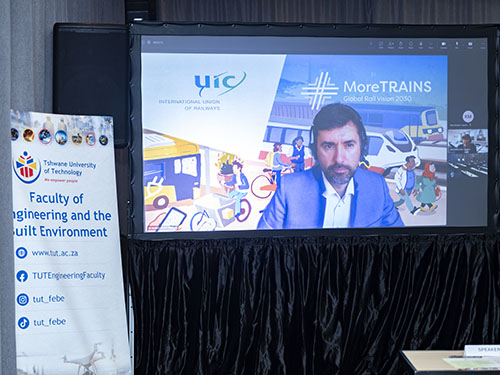 Dr Grigore Havarneanu, Director of Security at UIC.
According to Prof Shongwe, the training aligns with the Gibela Research Chair in Manufacturing and Skills Development, which supports local industrial capability, skills development and a sustainable rail manufacturing ecosystem across Africa.
Dr Grigore Havarneanu, Director of Security at UIC.
According to Prof Shongwe, the training aligns with the Gibela Research Chair in Manufacturing and Skills Development, which supports local industrial capability, skills development and a sustainable rail manufacturing ecosystem across Africa.
Day one focused on industry challenges and technological innovations shaping the rail sector. Dr Grigore Havarneanu, Director of Security at UIC, distinguished between safety and security in railway operations and explained that safety relates to technical failure and human error, while security involves deliberate threats and attacks.
He stressed that both physical security measures and passenger perceptions of safety remain critical, while adding that building trust among commuters depends on creating environments where passengers feel safe.
"Building trust among commuters starts with creating railway environments where passengers genuinely feel safe," he said highlighting CCTV systems access control environmental design and trained personnel.
Nompumelelo Mncwabe, Head of Continuous Improvement at Transnet Engineering, called for modernisation of ageing rail infrastructure and highlighted challenges, including deteriorating systems signalling failures, unreliable electrical networks, theft, vandalism and rising maintenance costs.
 Head of Continuous Improvement at Transnet Engineering Nompumelelo Mncwabe.
"Rail modernisation is now a national economic priority. Strategic investment stronger security interventions and skills development are essential if we are to restore reliable and affordable commuter rail services," said Mncwabe.
Head of Continuous Improvement at Transnet Engineering Nompumelelo Mncwabe.
"Rail modernisation is now a national economic priority. Strategic investment stronger security interventions and skills development are essential if we are to restore reliable and affordable commuter rail services," said Mncwabe.
Vuyiswa Tlomatsane, Service Operations Executive at Gibela Rail Transport Consortium, explained the challenge of integrating modern fleets with ageing infrastructure while building local skills to reduce reliance on international suppliers.
She emphasised joint recovery initiatives with customers to improve commuter rail services, optimise operations and strengthen maintenance systems. She also highlighted the importance of developing local expertise to reduce dependence on foreign suppliers.
On day two, the focus shifted to passengers during a Design Thinking Session on the Metrorail Western Cape network. Participants role-played different commuter profiles including students, young professionals, tourists and persons with disabilities to better understand travel experiences and develop solutions for safer more reliable and inclusive rail travel.
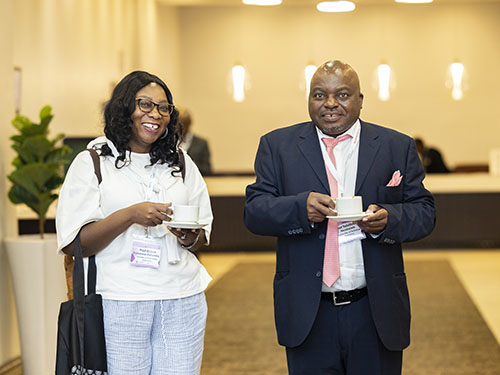 Host of the CRTS Training, Industrial Engineering Head of Department and Gibela Research Chair, Prof Tshifhiwa Nenzhelele, with former FEBE Executive Dean Dr Grace Kananana-Katumba.
Vanessa Pérez, Senior Advisor for Customer Experience and Accessibility in the Passenger Department at UIC, discussed how tourism sustainability and digital innovation are reshaping rail travel. She noted rising demand among younger travellers for eco-friendly options, seamless multimodal journeys and digital experiences. Pérez urged operators to use social media and new technologies to attract modern travellers and boost rail tourism.
Host of the CRTS Training, Industrial Engineering Head of Department and Gibela Research Chair, Prof Tshifhiwa Nenzhelele, with former FEBE Executive Dean Dr Grace Kananana-Katumba.
Vanessa Pérez, Senior Advisor for Customer Experience and Accessibility in the Passenger Department at UIC, discussed how tourism sustainability and digital innovation are reshaping rail travel. She noted rising demand among younger travellers for eco-friendly options, seamless multimodal journeys and digital experiences. Pérez urged operators to use social media and new technologies to attract modern travellers and boost rail tourism.
Maria Gusarova, Senior Advisor in the Passenger Department at UIC, emphasised the importance of passenger-centred station design and community-oriented infrastructure.
"Railway stations are not only transport hubs but also community and economic centres," she said.
Using examples from Paris, she showed how childcare centres, retail outlets, medical facilities and improved security can transform stations into destinations that better serve local needs.
Closing the programme, Kaparo Molefi, Executive Manager for Engineering at the Passenger Rail Agency of South Africa (PRASA), said commuters remain central to recovery and modernisation efforts.
He added that 321 of PRASA’s 495 stations are operational and that flagship stations are undergoing upgrades under broader station improvement and precinct development programmes.
The next CRTS Training will take place in Barcelona Spain from 28 to 30 October 2026.
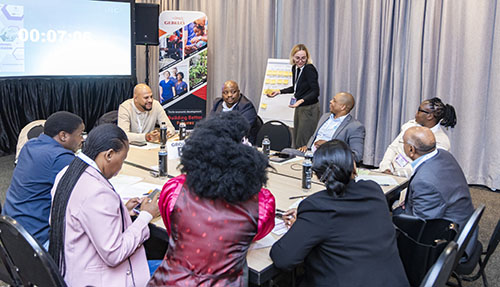 Participants at the inaugural African edition of the Commuter and Regional Train Services (CRTS) Training.
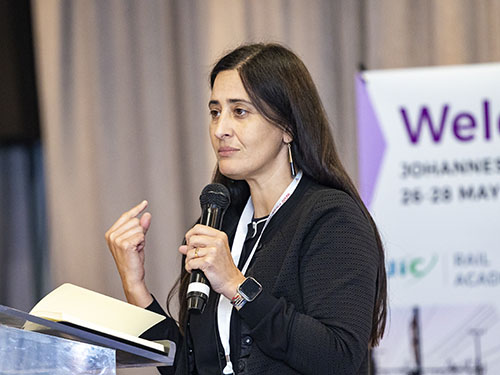 Senior Advisor for Customer Experience and Accessibility in the Passenger Department at UIC, Vanessa Pérez.
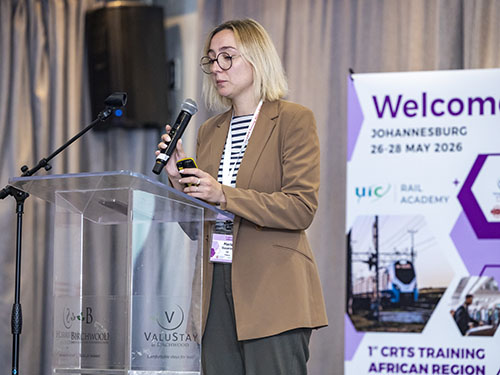 Maria Gusarova, Senior Advisor in the Passenger Department at UIC.
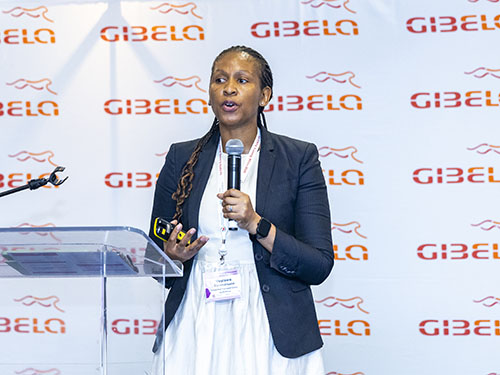 Vuyiswa Tlomatsane, Service Operations Executive at the Gibela Rail Transport Consortium.