It is all systems go for official launch of TUTRoD
Academics
2 September 2026
Researchers at Tshwane University of Technology (TUT) will soon have a powerful new platform to share, preserve and showcase their research data when the TUT Research Data Repository (TUTRoD) officially launches in October.
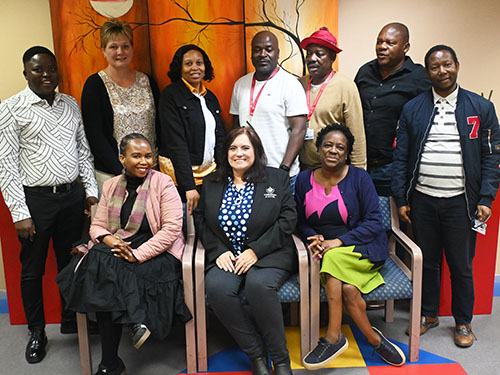 Members of the TUT Research Data Repository (TUTRoD) task team participated in a two-day workshop to advance the development and implementation of the platform ahead of its official launch in October.
Ahead of the launch, a dedicated Library and Information Services (LIS) task team completed an intensive two-day workshop to finalise key systems, policies, metadata requirements, training programmes and researcher-support mechanisms, ensuring that TUTRoD will provide researchers with the tools and guidance needed to manage, publish and maximise the value of their research data.
Members of the TUT Research Data Repository (TUTRoD) task team participated in a two-day workshop to advance the development and implementation of the platform ahead of its official launch in October.
Ahead of the launch, a dedicated Library and Information Services (LIS) task team completed an intensive two-day workshop to finalise key systems, policies, metadata requirements, training programmes and researcher-support mechanisms, ensuring that TUTRoD will provide researchers with the tools and guidance needed to manage, publish and maximise the value of their research data.
Following a directive from Library and Information Services (LIS) Director Sanele Kunene, the TUTRoD Project Leader and Manager of Centralised Support Services, Brenda Swanepoel, led a task team comprising eight librarians from various TUT libraries and IT and Systems Specialist Leswika Moremi in an intensive two-day workshop aimed at advancing the repository's development and implementation.
Brenda Swanepoel, TUTRoD Project Leader and Manager of Centralised Support Services, said: "The workshop is an important achievement in TUT LIS's commitment to strengthening responsible research data management, improving the visibility and discoverability of TUT research and creating new opportunities for researchers to share, preserve, cite and demonstrate the impact of their research data."
Swanepoel explained that the workshop was intentionally held before the University-wide launch because a research data repository involves far more than providing a platform for uploading files. The team carefully examined every stage of the researcher journey, from preparing datasets and capturing metadata to submission, review, publication, DOI assignment, discovery and monitoring research impact.
The workshop also allowed team members to work directly with the platform, identify possible challenges and determine the support researchers will need to use TUTRoD confidently. Discussions focused on metadata requirements, submission workflows, review and approval processes, licensing, access conditions, persistent identifiers and the integration of TUTRoD into LIS research-support services.
Swanepoel added that the Figshare institutional repository infrastructure that powers TUTRoD supports discoverable, citable, and reportable research outputs, while providing metadata management, persistent identifiers, usage statistics and research impact information.
She highlighted increased visibility as one of TUTRoD's most significant benefits. Published datasets receive persistent digital object identifiers (DOIs), enabling them to be cited and tracked. The platform also supports discovery through services such as Google, Google Dataset Search and Google Scholar, subject to applicable indexing requirements.
Swanepoel emphasised that researchers must carefully consider ethical approval, privacy, intellectual property, copyright, confidentiality, consent and any applicable funder or publisher requirements before publishing research data.
"A dataset should contain enough information for another person to understand what the data represents and, where permitted, to reuse it. This is why TUTRoD will incorporate a review process and researcher guidance rather than treating the repository as a simple file-storage facility," she said.
She added that high-quality metadata and documentation remain essential to ensure compliance with data-protection requirements and to prevent the publication of identifying or sensitive information.
Swanepoel concluded that LIS will roll out a programme of researcher engagement and training to help researchers understand not only how to deposit data but also why effective research data management is critical to increasing the reach, visibility and long-term value of their research.