Global tech insights inspire ICT students at TUT symposium
Academics
13 May 2026
By Arnold Nkuna and Dr Thembeka Manetje
Students, academics and researchers at the Tshwane University of Technology’s Faculty of Information and Communication Technology gained valuable international insight into emerging technologies, STEM transformation and renewable energy during an academic symposium and international visiting Prof lecture series hosted at the Soshanguve South Campus. The initiative strengthened global collaboration, promoted research engagement and equipped students with industry-relevant knowledge and skills.
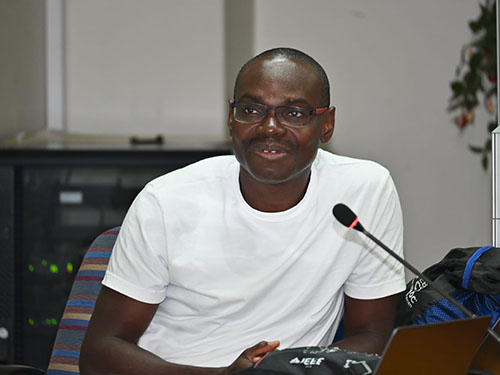 Professor Pius Owolawi
The academic symposium and international visiting Prof lecture series hosted at the Soshanguve South Campus created a platform for knowledge sharing, research collaboration and international academic engagement.
Professor Pius Owolawi
The academic symposium and international visiting Prof lecture series hosted at the Soshanguve South Campus created a platform for knowledge sharing, research collaboration and international academic engagement.
The event brought together students, academics, researchers and academic partners for a dynamic exchange of ideas on current developments, innovation and challenges within the ICT sector.
The collaborative initiative between FoICT, the MICT SETA 4IR Research Chair, and the TUT-GCSU Exchange Programme focused on emerging technologies, STEM transformation and renewable energy, while enriching discussions through international perspectives.
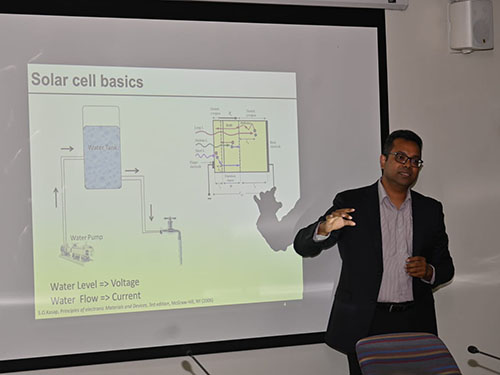 Professor Hasitha Mahabaduge
Prof Hasitha Mahabaduge from Georgia College & State University delivered in-depth presentations on high-efficiency flexible CdTe solar cells and the systematic reform of STEM education through Vertically Integrated Projects (VIP). His presentations exposed students to cutting-edge research and demonstrated how innovation continues to reshape technology-driven industries.
Professor Hasitha Mahabaduge
Prof Hasitha Mahabaduge from Georgia College & State University delivered in-depth presentations on high-efficiency flexible CdTe solar cells and the systematic reform of STEM education through Vertically Integrated Projects (VIP). His presentations exposed students to cutting-edge research and demonstrated how innovation continues to reshape technology-driven industries.
Through direct engagement with an international academic expert, students gained valuable insight into real-world research applications and emerging technological developments relevant to industry.
The sessions encouraged interdisciplinary problem-solving, strengthened critical thinking and highlighted the role of academic research in addressing societal challenges such as energy constraints and skills development. Engagements between students and academics also helped bridge the gap between theoretical knowledge and practical application.
Prof Pius Owolawi, Assistant Dean for Industry Liaison, Special Projects, and Work-Integrated Learning (WIL), strengthened student readiness for the workplace by aligning academic programmes with industry demands. His office continues to facilitate initiatives that expose students to practical and career-oriented learning opportunities.
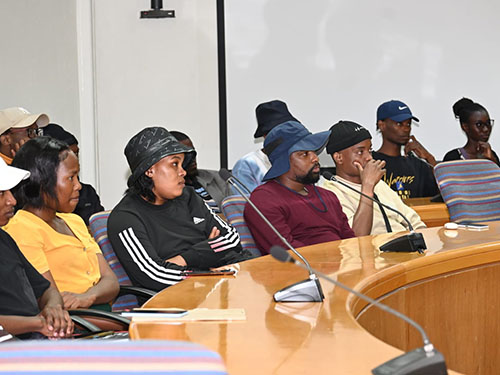 Student attendees.
Through initiatives such as these, students can engage directly with industry experts, gain insight into emerging workplace trends and develop a clearer understanding of employer expectations. These experiences prepare graduates for professional environments by fostering innovation, cultivating research-informed thinking and expanding valuable industry networks.
Student attendees.
Through initiatives such as these, students can engage directly with industry experts, gain insight into emerging workplace trends and develop a clearer understanding of employer expectations. These experiences prepare graduates for professional environments by fostering innovation, cultivating research-informed thinking and expanding valuable industry networks.
The initiative also reinforced the Faculty’s commitment to developing technologically skilled, research-focused and workforce-ready graduates. It strengthened the Faculty’s academic reputation while encouraging collaboration between higher education institutions and global partners.
The symposium positioned the Faculty at the centre of international conversations on technology and education, promoted innovation-driven learning and contributed to curriculum development aligned with global trends.
Beyond its impact on students, the initiative also strengthened the Faculty’s role as a hub of academic excellence, digital transformation and forward-looking learning while contributing meaningfully to the evolving technological landscape.