FEBE pilot brings clean energy innovation to rural communities
Academics
8 May 2026
By Mosima Rafapa
The Tshwane University of Technology’s Faculty of Engineering and Built Environment (FEBE), in partnership with Ekasi Energy, is advancing clean energy innovation through a community-based pilot project in Thohoyandou, Limpopo. The initiative tested Smart Home Energy (SHE) technology designed to provide smoke-free, efficient cooking solutions for rural and off-grid communities while supporting health, sustainability, and local economic development.
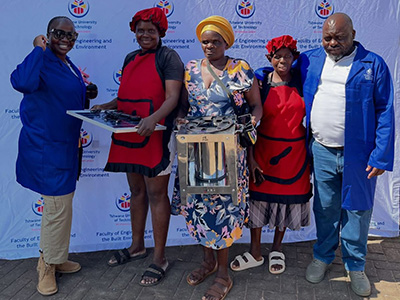
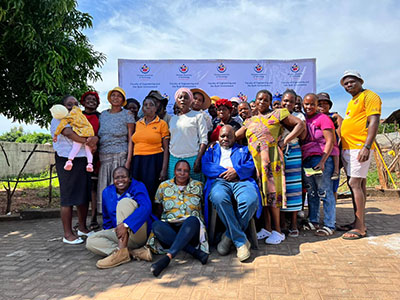 Dr Ragosebo Kgaugelo Modise and Prof Gift Nenzhelele are pictured with Khubvi, Tshiseluselu residents in Thohoyandou during the pilot of the Smart Home Energy technology.
Through its Department of Industrial Engineering, FEBE conducted a two-day pilot project on 13 and 14 April to assess how residents interact with a portable fan-assisted micro gasifier cookstove powered by smoke-free biomass fuels.
Dr Ragosebo Kgaugelo Modise and Prof Gift Nenzhelele are pictured with Khubvi, Tshiseluselu residents in Thohoyandou during the pilot of the Smart Home Energy technology.
Through its Department of Industrial Engineering, FEBE conducted a two-day pilot project on 13 and 14 April to assess how residents interact with a portable fan-assisted micro gasifier cookstove powered by smoke-free biomass fuels.
Funded through a collaboration between the European Union and the African Union, the project began in 2023 and includes an international consortium comprising Graz University of Technology’s Institute of Thermal Engineering, research collaborators from Makerere University, and industry partners in Austria and France. In South Africa, funding is allocated to the Department of Science, Technology and Innovation and administered by the South African National Energy Development Institute.
Dr Ragosebo Kgaugelo Modise, project leader, led the final pilot stage of the SHE initiative with support from Prof Gift Nenzhelele and Rhulani Saka from the Department of Industrial Engineering.
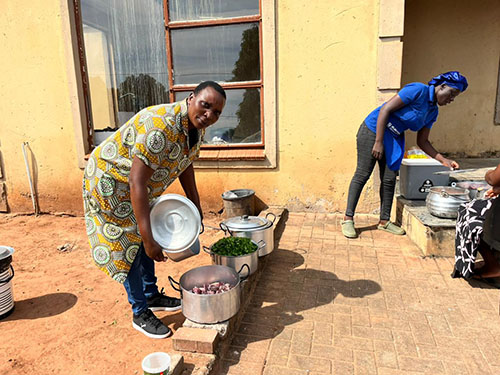
On the first day of pilot testing, residents used stove technology to prepare familiar meals while researchers observed its performance in everyday household settings. On the second day, participants completed surveys to provide feedback on usability and effectiveness.
Project promotes the use of wood biomass to reduce pressure on natural forests while lowering smoke exposure associated with traditional cooking methods.
Godfrey Dlulane, a consultant from Ekasi Energy, said direct engagement with communities plays an important role in improving technology.
 “It is important for us to see how people interact with technology in their own environment. Feedback we receive directly from users helps us improve design and ensure the solution is practical, efficient and meets everyday needs,” he said.
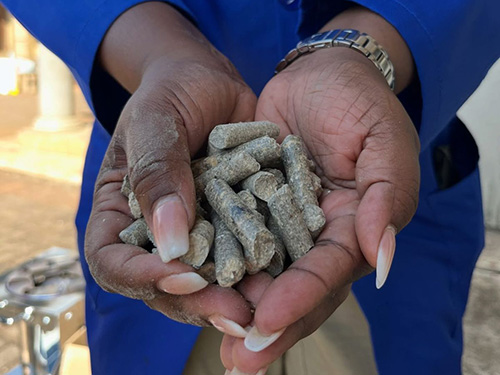
The stove uses compressed biomass pellets and can be integrated with renewable energy sources, such as solar power. Technology is designed for informal settlements and communities with limited access to electricity.
Prof Gift Nenzhelele, Head of Department, said partnerships between academia and industry strengthen the development of sustainable solutions.
“This project shows how partnerships between academia and industry can deliver solutions that respond to real challenges faced by communities,” he said.
Prof Nenzhelele said initiative also creates opportunities for entrepreneurship and local economic participation.
“This work creates space for local entrepreneurs to produce biomass pellets from waste materials. It supports circular economy while enabling communities to participate in renewable energy value chains,” he said.
He added that next phase of project focuses on establishing local businesses to produce and supply biomass pellets within communities.
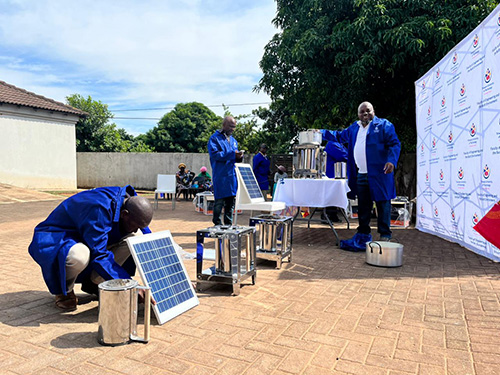 FEBE and industry partner, Ekasi Energy, pilot the Smart Home Energy technology in Khubvi, Tshiseluselu village, in Thohoyandou.
“The plan after pilot phase is to set up businesses that will produce and supply pellets locally. This will make it easier for residents to access fuel while also creating jobs within community,” he explained.
FEBE and industry partner, Ekasi Energy, pilot the Smart Home Energy technology in Khubvi, Tshiseluselu village, in Thohoyandou.
“The plan after pilot phase is to set up businesses that will produce and supply pellets locally. This will make it easier for residents to access fuel while also creating jobs within community,” he explained.
Dr Ragosebo Kgaugelo Modise project leader, said initiative demonstrates how engineering innovation can improve lives through practical solutions.
“Through this initiative, FEBE is showing how engineering innovation, supported by industry and global partnerships, can deliver practical solutions that improve lives,” she said.
Dr Modise said project aligns with several global priorities, including Sustainable Development Goal 7 on affordable and sustainable energy, SDG 13 on climate action through reducing carbon emissions from inefficient cooking technologies, as well as goals linked to good health and well-being, gender equality and responsible consumption and production.
Project has already expanded beyond Limpopo. Last Friday, research team piloted technology in informal settlement at Swart Dam in North-West province to evaluate its performance in different community environments.
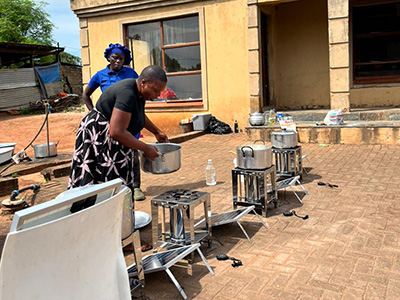 Villagers in Khubvi, Tshiseluselu use the gasifier cookstove to prepare familiar meals, which was tested on April 13 and 14.