Ethical AI Workshop advances digital transformation in Higher Education
Academics
29 May 2026
By Kgothatso Monono
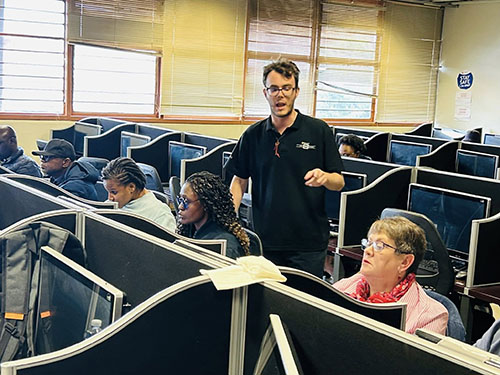
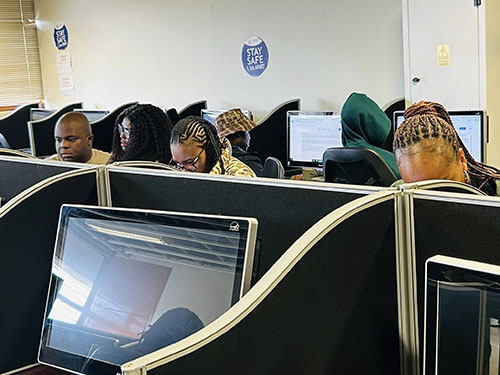
Staff and postgraduate students gathered at the ICT Research Lab at the Soshanguve for the Ethical Use of AI Workshop: Empowering Every Learner and Leader. The three-day initiative explored the growing role of Artificial Intelligence (AI) in education while placing ethics, responsible innovation and human-centred values at the heart of digital transformation.
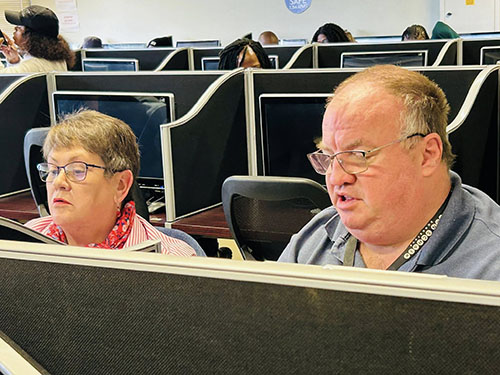 Hosted by Dr Michael Moeti, Assistant Dean for Teaching and Learning, and assisted by Faculty Administrator Lizzy Mafora, the workshop provided an inclusive platform for participants to engage with real-world AI applications and explore how technology can be integrated responsibly into academic environments.
The programme focused on practical uses of AI in education, demonstrating how digital tools can support teaching and learning, improve institutional operations and strengthen academic and security systems. Participants also examined five key ways in which educational leaders can use AI to improve institutional effectiveness while safeguarding academic integrity and ethical standards.
Through demonstrations, presentations and interactive discussions, staff and postgraduate students explored the opportunities and responsibilities associated with AI adoption. Discussions encouraged participants to consider fairness, accountability, privacy, transparency and the human-centred values that should guide digital innovation.
 The workshop highlighted an important reality in higher education: AI is becoming an increasingly influential tool, but its value depends on thoughtful and responsible implementation.
Dr Moeti highlighted the importance of equipping the academic community with both technical knowledge and ethical awareness.
“As the digital landscape continues to evolve, institutions of higher learning have a responsibility to ensure that staff and students are not only exposed to emerging technologies but are also equipped to use them ethically and responsibly. Workshops such as these position our Faculty to engage confidently with AI while keeping education and human development at the centre.”
The workshop also introduced participants to educational technologies and AI-powered tools designed to support modern teaching and learning environments. Demonstrations showed how these innovations can be integrated meaningfully into higher education settings.
 Ryan Gallus, industry specialist and facilitator, delivered the training sessions and shared valuable insights into ethical AI practices and educational innovation. He thanked the organisers for the opportunity to engage with the TUT community and welcomed future collaboration.
Dr Bertie Buitendag, Senior Lecturer in Computer Science, reflected on the value of the training for staff and postgraduate students and emphasised the importance of understanding both the possibilities and limitations of AI within academia.
“The workshop created a valuable opportunity for staff and students to engage with AI beyond theory. Understanding how these tools can support teaching, research and academic operations while also recognising the ethical responsibilities involved is essential in preparing our academic community for an increasingly AI-driven future.”
 The workshop reinforced a key message for FoICT and the higher education sector. Artificial Intelligence offers significant opportunities for innovation and growth, while its greatest value lies in ensuring that it is used responsibly, inclusively and ethically.