Electronic repair and entrepreneurial training for unemployed youth, women and community members
Academics
27 November 2026
By Phumla Mkize
For someone without a job, the ability to repair a broken smartphone, household appliance or vehicle electrical system can represent more than a technical skill. It can be an opportunity to earn an income, serve a community and take a step towards financial independence.
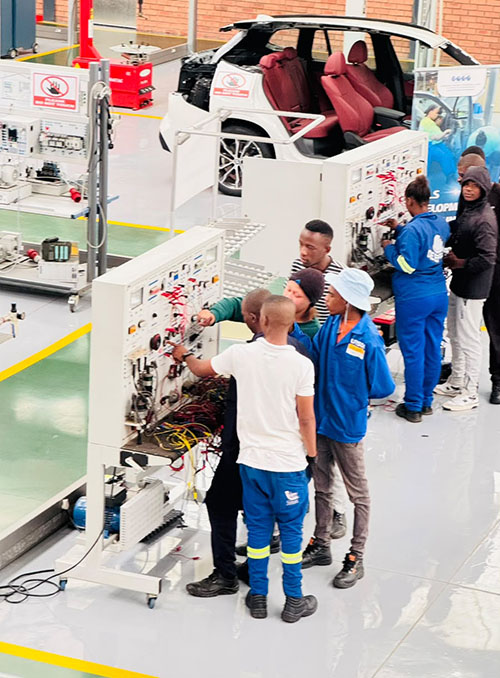 This is the opportunity that the Tshwane University of Technology’s (TUT) Technology Station in Electronics (TSE), in the Faculty of Engineering and the Built Environment, in partnership with the Centre for Entrepreneurship, is working to create through practical technical and entrepreneurial training for unemployed youth, women, and community members.
Between January 2025 and August 2026, the programmes trained 1 182 participants, with support from the Technology Innovation Agency (TIA), the Manufacturing, Engineering and Related Services Sector Education and Training Authority (merSETA), the Department of Labour and the Automotive Industry Development Centre (AIDC). The initiative focuses on equipping participants with skills they can use to pursue employment, generate income and establish small businesses within their communities.
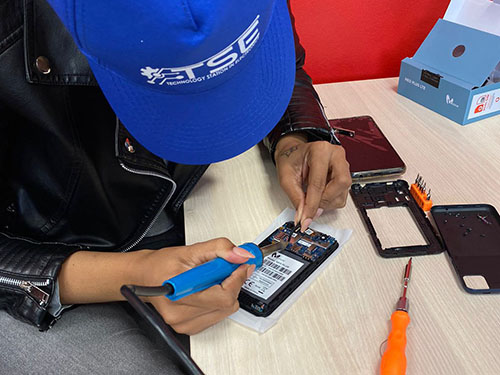
Participants receive hands-on training in diagnosing and repairing household appliances, smartphones, automotive electrical circuits and wiring. They learn how to identify faults, safely dismantle equipment, replace faulty components, reassemble products, and test them before returning them to service. Rather than focusing solely on theory, the training provides participants with practical experience solving everyday technical problems.
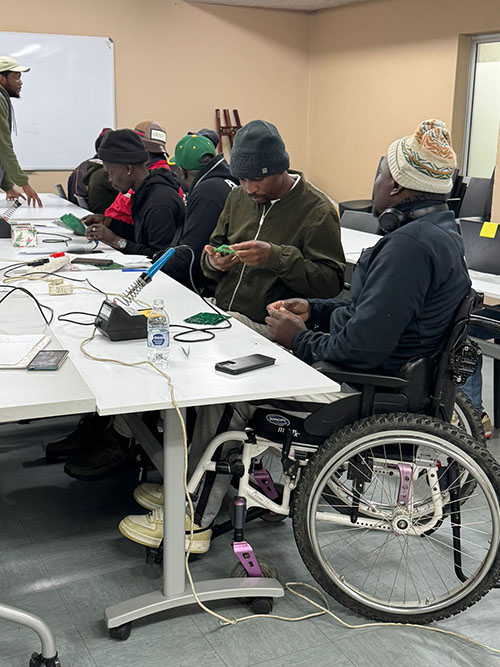 For people facing barriers to employment, these skills can open alternative routes into economic participation. With the right knowledge, a participant can begin offering repair services from home, assist local households and businesses, or work towards building a small enterprise. The programmes strengthen this opportunity by including entrepreneurship training and providing participants with a toolkit to retain after completing the course.
The initiative has reached communities including Soweto, Mabopane, Soshanguve, Rosslyn, Ga-Rankuwa, Winterveld and Klipgat, bringing technical training closer to people who might otherwise struggle to access specialised learning opportunities. The approach is particularly relevant for unemployed youth and women, as well as people with disabilities and others who may encounter barriers to conventional employment.
The impact can extend well beyond the individual. A trained participant can provide an affordable repair service to a neighbour, help a household avoid replacing an expensive appliance or build a customer base that supports a growing business. Repairing rather than discarding electronic and electrical products can also extend their useful life and help reduce waste.
While the people trained represent an important achievement, the deeper measure of success is what participants can do with their new skills. Each toolkit and each practical lesson provides a starting point for creating opportunities, meeting local needs and building greater self-reliance.
For more information, contact Annette van der Poel: vanderPoelA@tut.ac.za