Doctoral study reveals education is key to better health
AcademicsOther
22 May 2026
By Reatlegile Ratlagane
Besuthu Hlafa, an Economics Lecturer at the Tshwane University of Technology, recently graduated with a doctorate degree from the University of Fort Hare. His research, An Economic analysis of the impact of education on health behaviours and health outcomes in the Eastern Cape Province, South Africa, explores how education influences health.
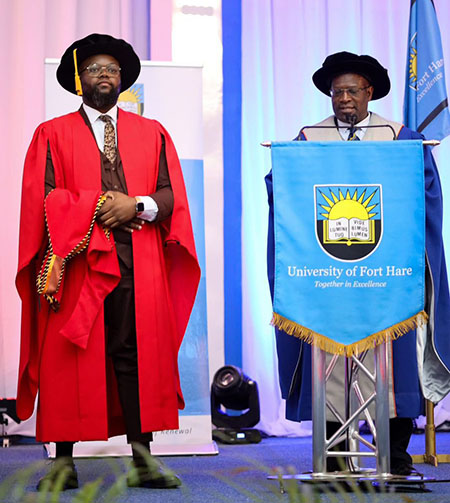 The newly graduated Dr Besuthu Hlafa
Dr Hlafa is convinced that quality education is the foundation for good health.
The newly graduated Dr Besuthu Hlafa
Dr Hlafa is convinced that quality education is the foundation for good health.
“The study advocates for joint investment in both health and education, for investment in education is financial and investment in health affords one the longevity to enjoy the benefits of the investment in education and also allows for one to be in service longer, positively contributing to economic development and growth,” he explained.
Addressing the gaps in health economics, the study explored the relationship between education and health behaviour in South Africa. It highlights the need for joint investment in education and health to improve health outcomes.
Dr Hlafa’s doctoral research found that education plays a crucial role in shaping both health behaviours and health outcomes. The study revealed that individuals with higher levels of education are more likely to make healthier lifestyle choices and report better overall health, with the strongest positive effects evident among those with tertiary qualifications. The findings suggest that education is a powerful tool for improving wellbeing and reducing health inequalities, highlighting the need for stronger integration of health education within South Africa’s education system to promote health literacy and support better long-term health outcomes.
The key findings are also addressed in a series of articles that they are currently preparing for publication.
“Besides my supervisors, my family and friends, who had to listen to all the stress and frustrations that came with it, played a critical role. Also, in a very special way, Dr Qaqambile Mathentamo, a friend who navigated the entire study journey with me, played the most important role. He was also busy with his PhD, and we became partners in the journey. This made it worthwhile,” highlighted Dr Hlafa.
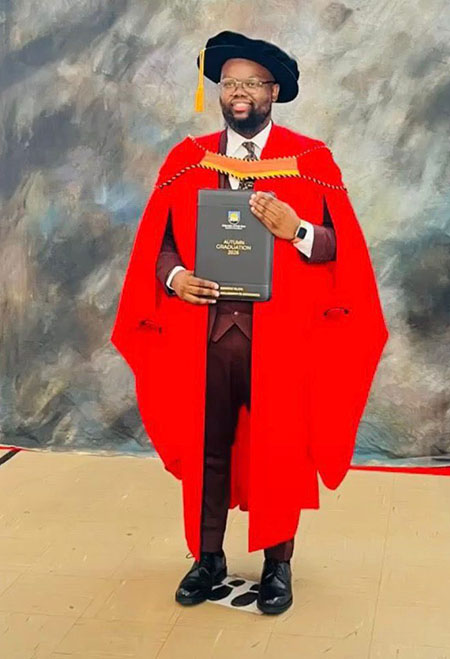 Supported throughout his academic journey by his supervisors, family and friends, Dr Hlafa drew significant motivation from his close friend, Dr Qaqambile Mathentamo, who was pursuing his doctoral studies at the same time. Their shared commitment to academic excellence and overlapping research interests created a valuable source of encouragement and intellectual exchange. Mathentamo’s research focuses on economic growth, the economics of happiness, social capital, indigenous knowledge systems and socio-economic development, areas that closely align with Hlafa’s own scholarly interests. This mutual engagement in research not only enriched their academic pursuits but also provided a strong support system that helped sustain Hlafa’s determination and resilience throughout the demanding doctoral journey.
Describing the journey as long and rewarding, Hlafa was part of a cohort of 10 university staff members from two institutions, supervised across three institutions. He encouraged postgraduate students to be strategic and take care of their mental health.
“Master’s and doctoral studies can be a lonely and demanding journey, particularly doctoral research that is unstructured and self-directed. My advice is to find a strong support partner early, stay consistently engaged with your work and remain committed to the reason you started,” he advised.
As he starts this new journey, Dr Hlafa plans to contribute to solving the societal problems and improve economic standards of living for all South Africans.