Cybersecurity experts prepare Faculty of ICT students for an AI-driven digital future
Academics
9 November 2026
By Kgothatso Monono
Work-Integrated Learning (WIL) students from the Department of Information Technology at the Tshwane University of Technology (TUT) gained valuable insights into the evolving cybersecurity landscape during a guest lecture held in collaboration with the ISC2 Gauteng Chapter.
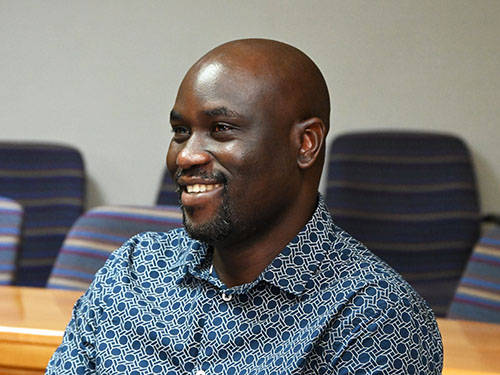 IT Head of Department Prof Topside Mathonsi.
Held at the Soshanguve South Campus, the engagement brought together students, academic representatives and cybersecurity professionals to explore emerging technologies, industry developments and career opportunities in the cybersecurity sector.
The session was arranged by Prof Mathonsi, IT Head of Department, with the support of Prof Vinessa Naidoo of the Tshwane School for Business and Society and ISC2 Gauteng Chapter Cybersecurity Ambassador, as part of the department’s commitment to strengthening relationships between academia and industry.
Opening the programme, Dr Tshimangadzo Tshilongamulenzhe emphasised the importance of connecting academic knowledge with professional practice, particularly as students prepare to transition into the workplace.
Prof Naidoo encouraged students to embrace opportunities for learning, continuously develop their skills and remain committed to achieving their professional goals. Dr Phaphama Tshisikhawe also shared a message of encouragement, urging students to persevere through challenges and remain focused on their aspirations. Her message highlighted resilience as an essential quality for students navigating their academic journeys and preparing for the demands of the professional environment.
 Prof Vinessa Naidoo of the Tshwane School for Business and Society.
The technical presentations focused on the opportunities and challenges associated with Artificial Intelligence (AI) in cybersecurity. ISC2 Gauteng Chapter members, Ms Fikiswa Ntontela and Mr Blaise Ntwali, explored how AI is transforming cybersecurity operations by enabling security teams to analyse large volumes of data, detect suspicious patterns, and respond more efficiently to potential threats.
They also highlighted the risks associated with AI adoption, including privacy and data protection concerns, biased or inaccurate outputs, and the potential for cybercriminals to exploit AI technologies for malicious purposes. The discussions reinforced the importance of responsible AI implementation, supported by appropriate security measures, human oversight, and ethical considerations.
Moving beyond technical knowledge, ISC2 Gauteng Chapter President, Mr Daryl Nyawasha, challenged students to consider the entrepreneurial potential of their academic projects. His presentation focused on how projects can be developed into viable business ventures by identifying real-world problems, understanding potential beneficiaries, and communicating the value of proposed solutions.
 University Spokesperson Dr Phaphama Tshisikhawe.
He further explored the importance of entrepreneurship, personal branding, and the development of a combination of technical and professional competencies. These, he noted, are important in helping IT graduates position themselves effectively and distinguish themselves in an increasingly competitive industry. Established in 2012, the ISC2 Gauteng Chapter is a non-profit organisation committed to advancing cybersecurity through professional development, knowledge-sharing and collaboration. The Chapter provides a platform for cybersecurity practitioners to exchange expertise, engage with developments in the field and promote greater awareness of cybersecurity threats and practices.
The engagement provided WIL students with an opportunity to interact directly with experienced professionals, ask questions and gain a better understanding of the expectations and opportunities within the cybersecurity industry. It also highlighted the value of industry partnerships in preparing graduates to respond to the changing demands of the ICT sector.
Delivering the closing remarks, Dr Solly Maswikaneng, Senior Lecturer and Section Head in the Department of Information Technology, thanked the ISC2 Gauteng Chapter, presenters and students for their contributions to the programme.
The event concluded with a guided tour of selected Faculty of ICT laboratories, including the SENTECH Laboratory, giving visitors an opportunity to explore the faculty’s practical learning and technology facilities.