Centre for Tissue Engineering sets benchmark for quality in human tissue management
Academics
4 August 2026
The Tshwane University of Technology's Centre for Tissue Engineering (CTE) has reaffirmed its position as a leader in tissue banking and transplantation, following the renewal of its ISO 9001 certification. The internationally recognised quality management certification confirms that the Centre meets the rigorous standards for sourcing, processing and supplying human tissue for implant, transplant and therapeutic purposes, supporting quality healthcare and improved patient outcomes.
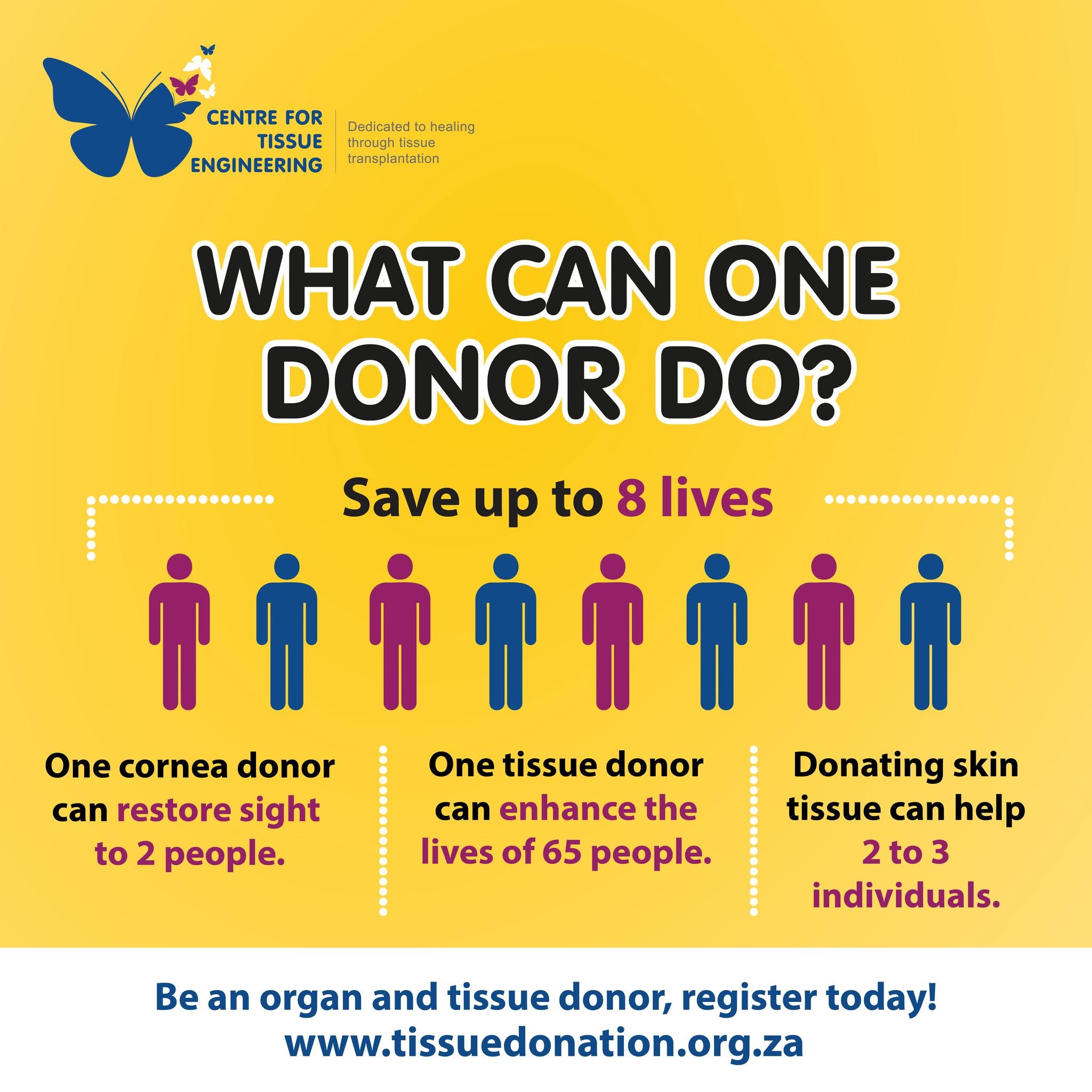
The announcement couldn’t come at a more opportune time, with August being National Organ and Tissue Donor Month as well, aiming to address the critical shortage of donors, clear up myths and encourage more people to sign up as organ and tissue donors.
Dr Vathi Papu-Zamxaka, Deputy Vice-Chancellor: Research, Innovation and Engagement, said the achievement proves TUT's commitment to excellence in research, innovation and healthcare.
"Maintaining ISO 9001 certification affirms the Centre's ability to meet internationally recognised quality standards while advancing research and innovation that make a meaningful difference in people's lives. It reflects the high level of expertise, accountability and continuous improvement that characterise this important strategic asset of the University," she said.
The certification covers CTE's work in sourcing, processing and supplying musculoskeletal tissue, skin tissue, ocular tissue, cardiovascular tissue and amniotic membranes of human origin for implant, transplant and therapeutic purposes.
According to Dr Papu-Zamxaka, ISO 9001 certification offers significant benefits beyond regulatory compliance.
"The certification recognises that the Centre has implemented robust quality management systems that promote consistency, traceability, risk management and continuous improvement. It strengthens confidence among healthcare professionals, partners and patients while ensuring that every process meets stringent safety and quality requirements."
This achievement adds to the Centre's long record of innovation and service. Established in 2002 following an agreement between TUT and Bone SA, CTE became South Africa's second human bone bank and was created to address the growing demand for donated bone tissue while advancing research into new treatment options.
Over the past two decades, the Centre has expanded its capabilities and influence in the healthcare sector. The CTE recently relocated from the specialised facilities it occupied at the Council for Scientific and Industrial Research (CSIR) to Ditsela Place in Hatfield, providing access to state-of-the-art laboratories and advanced tissue-processing infrastructure.
The Centre’s list of successes includes the introduction of a cornea banking programme in 2011 and the expansion of its services to include a broader range of cadaveric tissues. The Centre also played a key role in drafting South Africa's tissue bank regulations and became a founding member of the South African Tissue Bank Association (SATiBA).
One of the Centre's most significant accomplishments was in 2016 when it launched Africa's first skin banking programme. The initiative created a secure and sustainable source of donated skin for burn patients and positioned TUT at the forefront of medical innovation on the continent. The programme expanded treatment options for patients requiring specialised tissue transplantation and strengthened South Africa's tissue banking capabilities.
Prof Ntebogeng Mokgalaka-Fleischmann, Executive Dean of the Faculty of Science, added that the Centre's impact extends beyond its operational achievements.
"CTE is an excellent example of how research, innovation and specialised scientific expertise can address real societal needs. The Centre's work supports healthcare professionals, advances scientific knowledge and provides life-changing solutions for patients who depend on tissue transplantation."
Today, CTE operates as a multidisciplinary human tissue bank managed by TUT and authorised by the Department of Health. The Centre uses internationally aligned quality systems and ISO-compliant processing procedures to ensure the safety, quality and traceability of donated tissue products.
As the first cadaveric tissue bank in South Africa to obtain ISO 9001 certification, the Centre sets benchmarks for quality management in the tissue banking sector. The certification supports improved quality and consistency, stronger risk management, enhanced operational efficiency, regulatory compliance and greater stakeholder confidence.
"Maintaining this certification strengthens TUT's reputation as a University that delivers research and innovation with tangible benefits for society. It highlights the Centre's unwavering commitment to quality, patient safety and continuous improvement while contributing to better healthcare outcomes in South Africa and beyond," Dr Papu-Zamxaka said.
As CTE advances its mission of healing through tissue transplantation, its continued ISO 9001 certification provides further recognition of a Centre that is a national leader in tissue banking, research and healthcare innovation.