Afrikan performance meets global conversation at AfTA2026
Academics
30 June 2026
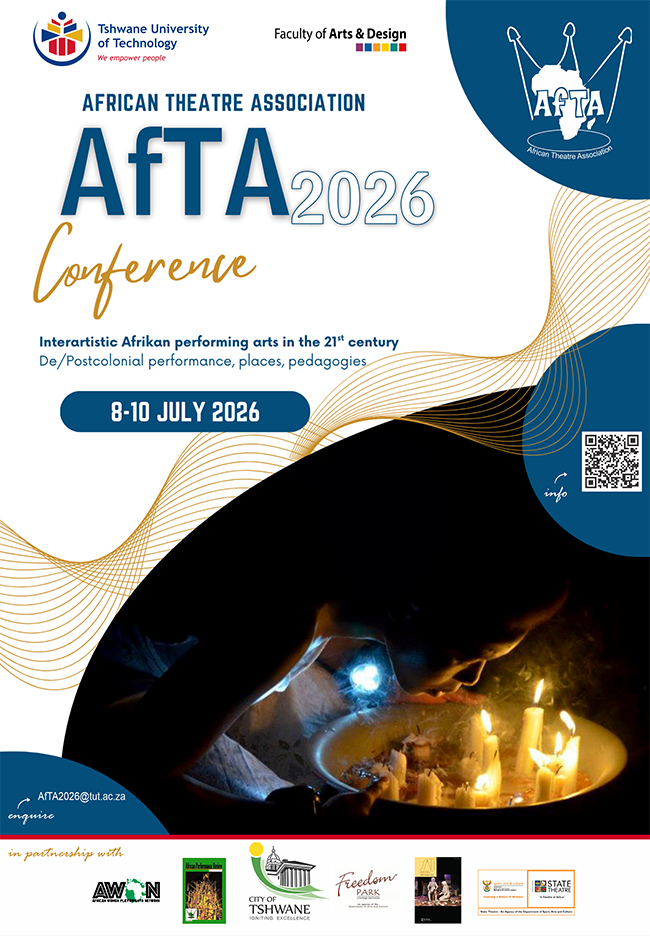
Afrikan performance will meet global conversation at the international African Theatre Association (AfTA) annual conference hosted by the Tshwane University of Technology (TUT) Department of Performing Arts, Faculty of Arts and Design, this year. AfTA2026 runs from 8 – 10 July with the opening function on the evening of 7 July.
It is set to bring warmth to even the coldest days of winter, with a lineup of 27 world-wide universities. This includes Barbados, US, UK, Uganda, Nigeria, Namibia, Zimbabwe, Ghana and Eswatini. The South African delegation includes a variety of national universities, most noticeably staff and students from TUT, as this allows for people at home the opportunity to experience an international conference.
This year’s collection of papers brings together a diverse range of scholarly, creative and practice-based contributions responding to the conference theme, Interartistic Afrikan[1] Performing Arts in the 21st Century: De/Post-Colonial Performance, Places and Pedagogies. The abstracts gathered reflect the richness, complexity and dynamism of contemporary Afrikan performance practices, including the many ways in which artists, scholars and practitioners continue to engage critically with histories of colonialism, ongoing processes of decolonisation and emerging futures.
The notion of “interartistic performance” foregrounds the multi-faceted intersections and collaborations between art forms, disciplines, technologies and cultural practices. The contributions gathered show innovative explorations of performance as a site of knowledge production, social engagement, political intervention and aesthetic experimentation.
The abstracts reveal how contemporary Afrikan performing arts continue to challenge inherited frameworks while generating new modes of expression, belonging and understanding.
The conference sub-themes – Creative Industries and Cultural Discourses of the Global South; Artivism Activations in Performance and Theatre; De/Post-Colonial Aesthetics and Experiential Design; Entanglements in Contemporary Performance Practice; and New Epistemes, New Theories and New Pedagogies – provide important avenues through which contributors examine the evolving relationships between performance, culture, identity, community and knowledge. Together, these conversations illuminate the transformative potential of the performing arts in addressing contemporary social, political and cultural realities.
The City of Tshwane is an integral partner and supports this intellectual engagement with national and international delegates in the capital city of Pretoria. Additional partners have extended their collaboration to host the last day of the conference at Freedom Park, with the opening function scheduled to take place at the South African State Theatre on the evening of 7 July.
The conference has already identified two leading forums for publication. The African Performance Review (APR) which is a bi-annual peer-reviewed journal of AfTA, will publish a conference proceedings edition while the South African Theatre Journal (SATJ) has agreed to publish a special issue. A call for submission of articles will go out directly after the conference has concluded. Submitted articles should develop ideas that emerged from the conference discussions and engagements.
Besides academic articles, reflexive essays, reviews, interviews and reflections based on the performances and panels presented at the conference are welcome. As a post-conference reflection, only papers presented at the AfTA 2026 conference will be eligible for submission.
Enquiries: AfTA2026@tut.ac.za
[1] The conscious choice to make use of the “k” in the Afrikan for the title is based on the factor that most vernacular or traditional languages on the continent spell Afrika with a K. Therefore, the use of K is germane to us. The embracing K symbolises a kind of Lingua Afrikana, although coming from more than one Afrikan language.