Youth voice pushes for real influence in global policy spaces
AcademicsAlumni
3 December 2025
This year’s C20 and Y20 processes, under the 2025 G20 Presidency, offered critical opportunities to shape policies on education, youth inclusion and global governance.
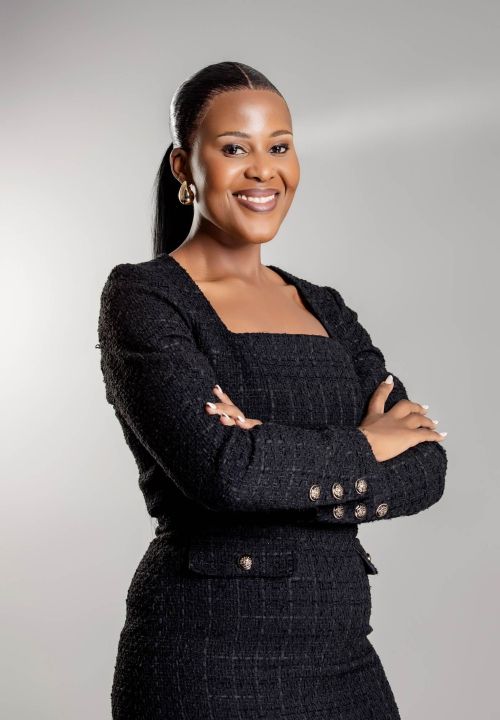 Zama Zikhali, Quality Advisor at the Tshwane University of Technology (TUT) responsible Surveys and Institutional Research
, shares her experience and reflections as a participant at the recent G20:
Zama Zikhali, Quality Advisor at the Tshwane University of Technology (TUT) responsible Surveys and Institutional Research
Zama Zikhali, Quality Advisor at the Tshwane University of Technology (TUT) responsible Surveys and Institutional Research, shares her experience and reflections as a participant at the recent G20:
“Through participation in the C20 Quality Education for a Sustainable Future Working Group and the Y20 South Africa Working Group on Meaningful Youth Engagement and Reforming Multilateralism for a Just Future, I gained direct insight into how global priorities are negotiated and how they intersect with local challenges in the Global South.
I was selected to serve as a member of the Y20 South Africa Working Group. The role is voluntary and focuses on participating in consultations, research, policy discussions and working sessions leading up to the Y20 Summit in August 2025. Although I am not a negotiator, I contribute evidence, insights and youth perspectives that inform policy recommendations. This appointment provides a platform to advance agendas on youth leadership, inclusion in governance and stronger mechanisms that enable young people to shape policy beyond symbolic participation.
A key part of this journey was participating in the Youth Multilateralism Forum. Discussions centred on strengthening youth representation in governance, addressing digital inequality, improving access to mental health and economic opportunities and ensuring that youth inclusion moves from consultation to real decision-making. Proposals included youth-led governance structures, multilingual policy instruments, subsidised digital access and youth councils that monitor implementation across the AU, UN and G20. The dominant message was clear: systems must give young people influence, not just visibility.
Contribution to the C20 Quality Education Policy Brief
Within the C20 Education Working Group, I contributed to the drafting of the Policy Brief: Quality Education for a Sustainable Future (Draft 3). My input supported thematic reflection on teacher development, inclusive education, foundational literacy and governance reforms. I emphasised evidence-based strategies that align SDG4 with practical implementation in developing countries, including multilingual education, Universal Design for Learning, equitable funding models and stronger inter-sector coordination. This work formed part of a collective drafting process facilitated by civil society organisations.
A central reflection is that education reform is inseparable from economic participation. Many young people in South Africa, especially in rural and township communities, turn to entrepreneurship as a means of survival rather than a structured economic pathway. For entrepreneurship to support development, it needs curriculum alignment, digital ecosystems, youth-friendly financing, innovation hubs and policies that enable equitable access to markets.
These engagements were a reminder that global policy forums are not prestige spaces. They are strategic platforms where nations arrive with clear agendas. Africa must do the same. The challenge now is translating high-level commitments into practical change: innovation hubs in townships, digital access, accountable governance, teacher development systems and education models that prepare young people for a changing economy.
We are not only seeking representation. We are here to co-create and co-author the future,” Zama concluded.